
SUMMARY
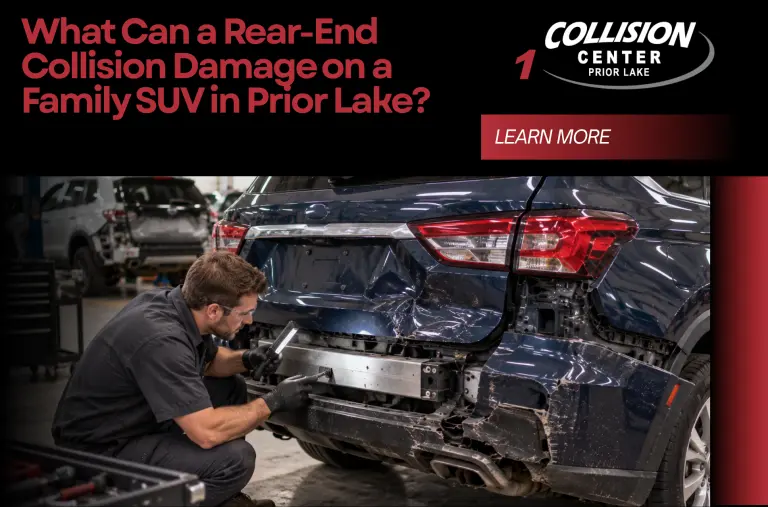
- A rear-end collision can damage much more than the visible bumper on a family SUV.
- Hidden damage may involve the bumper reinforcement, energy absorber, mounting brackets, liftgate, rear body structure, exhaust, suspension, wiring, cameras, and sensors.
- Modern family SUVs may have rear parking sensors, blind-spot monitoring, rear cross-traffic alert, cameras, and rear automatic braking technology around the damaged area.
- A bumper cover can flex during an impact and return close to its original shape while components underneath remain damaged.
- A liftgate that suddenly becomes difficult to close, sits unevenly, leaks, or makes unusual noises after an accident deserves further inspection.
- Rear-corner impacts can potentially affect wheels, tires, suspension, and alignment in addition to the body.
- Diagnostic scanning or ADAS calibration may be required depending on the vehicle, installed technology, damaged components, parts removed or replaced, and OEM procedures.
- An initial estimate may change after disassembly if technicians uncover collision-related damage that could not be seen during the first inspection.
- Minnesota law gives vehicle owners the right to choose their repair facility rather than being required to use a particular shop.
- Prior Lake drivers can have rear-end collision damage evaluated at Collision Center 1 Prior Lake, 16111 Main Ave SE, Prior Lake, MN 55372.
Why Can a Rear-End Collision Cause More Damage Than You See?
Family SUVs are built to handle everyday life.
They carry:
- Children
- Groceries
- Sports equipment
- Luggage
- Work gear
So when your SUV gets rear-ended in Prior Lake, your first concern may be whether everyone is okay.
Once immediate safety concerns have been addressed, another question usually follows:
How badly is the SUV actually damaged?
That answer is not always obvious.
You may see:
- Scratched bumper
- Cracked plastic
- Small dent
and assume the repair will be mostly cosmetic.
However, the exterior bumper cover is only one part of the rear of a modern SUV.
Behind and around it may be:
- Energy-absorbing components
- Reinforcement
- Brackets
- Wiring
- Parking sensors
- Radar
- Rear camera systems
- Structural components
A professional collision repair inspection helps determine whether the damage stops at the exterior or continues underneath it.
1. Can a Rear-End Collision Damage the Bumper Cover?
Yes.
The bumper cover is often one of the first visible components damaged during a rear-end accident.
You may notice:
- Scratches
- Paint transfer
- Cracks
- Dents
- Torn mounting areas
- Separation near the quarter panel
The cover is commonly made from flexible plastic.
That flexibility creates an important issue.
A bumper can sometimes:
- Flex during impact.
- Absorb some of the visible deformation.
- Move partially back toward its original shape.
The bumper may therefore look less damaged afterward than it was during the actual collision.
That does not automatically mean everything behind it remained undamaged.
2. What Can Be Damaged Behind the Bumper?
Depending on the SUV, components behind the bumper may include:
- Energy absorber
- Reinforcement beam
- Mounting brackets
- Wiring
- Sensors
- Structural attachment points
These components perform different functions.
The exterior cover primarily provides:
- Appearance
- Aerodynamics
- Protection for components underneath
The reinforcement and energy-management components behind it play different roles during an impact.
That is why an exterior inspection cannot always tell the complete story.
Can the Bumper Look Fine While the Reinforcement Is Damaged?
Potentially.
A flexible bumper cover may return close to its previous shape after the impact while a component behind it:
- Cracks
- Bends
- Compresses
- Breaks at a mounting point
This is one reason disassembly may be necessary before the repair facility can finalize the complete repair plan.
3. Can a Rear-End Collision Damage the Liftgate?
Yes.
Rear-end collision forces can reach the:
- Liftgate
- Hinges
- Latch
- Surrounding opening
- Weather seals
Obvious damage might include:
- Large dent
- Broken glass
- Crushed liftgate
But more subtle symptoms can also appear.
Pay attention if the liftgate:
- Becomes harder to close
- Needs extra force to latch
- Sits unevenly
- Makes a new noise
- Opens or closes differently
- Shows unusual panel gaps
These changes can indicate that something around the rear opening has shifted.
Why Do Liftgate Gaps Matter?
Panel gaps provide useful clues about alignment.
Before the collision, the gaps around the liftgate should generally be:
- Consistent
- Appropriate for the vehicle
After a rear impact, you might notice one side is:
- Tighter
- Wider
- Higher
- Lower
than the other.
An uneven gap does not by itself prove structural damage.
It does mean the repair facility should determine why the alignment changed.
The cause could involve:
- Liftgate itself
- Hinge
- Latch
- Mounting location
- Surrounding body structure
What if the Power Liftgate Stops Working?
Modern SUVs often have powered liftgates.
A rear collision could potentially affect:
- Latch
- Wiring
- Sensor
- Power mechanism
- Alignment
If the liftgate worked normally before the accident but afterward:
- Stops halfway
- Reverses unexpectedly
- Fails to latch
- Displays a warning
tell the estimator.
Do not assume it is unrelated simply because the exterior damage looks minor.
4. Can Rear-End Damage Cause Water Leaks?
Potentially.
A rear collision can disturb:
- Weatherstripping
- Seams
- Liftgate alignment
- Rear glass
- Body openings
If these areas no longer seal properly, moisture can enter the:
- Cargo area
- Spare tire compartment
- Interior trim
Watch for:
- Damp carpet
- Water smell
- Visible moisture
- Condensation
after rain or washing the SUV.
A leak that begins after the collision deserves investigation.
5. Can Rear-End Collisions Damage the SUV’s Structure?
Yes, depending on the impact.
SUVs contain structural components that help:
- Support the body
- Maintain vehicle geometry
- Manage collision energy
Rear structural areas may include components around:
- Rear body panel
- Floor
- Rails
- Quarter structures
- Reinforcement mounting areas
A stronger collision can deform these areas even when some exterior components remain recognizable.
The repair facility may need:
- Measurement
- OEM repair information
to determine whether structural components remain within manufacturer specifications.
Does Structural Damage Mean the SUV Is Totaled?
No.
Structural damage does not automatically mean a vehicle is a total loss.
Repairability depends on factors including:
- Damage severity
- Component involved
- Manufacturer procedures
- Parts required
- Vehicle value
- Overall repair cost
Some structural damage can be repaired according to OEM procedures.
Other components may require replacement.
The determination should be based on the actual damage and applicable repair information rather than the phrase “frame damage” alone.
6. Can a Rear-End Collision Damage Parking Sensors?
Yes.
Many family SUVs use ultrasonic parking sensors installed directly in the rear bumper.
The Insurance Institute for Highway Safety identifies parking sensors as one of the technologies used in rear crash-prevention systems, along with rear cross-traffic alert and rear automatic braking.
Because parking sensors can be mounted in the bumper cover, a rear collision may affect:
- Sensor
- Sensor holder
- Wiring
- Mounting position
- Surrounding bumper material
A sensor may also look undamaged from outside while the bracket behind it has been affected.
What Are Signs of a Parking Sensor Problem?
After a rear collision, pay attention if:
- Sensor constantly beeps
- Sensor stops detecting objects
- Parking display behaves differently
- System warning appears
- One side responds differently than before
Tell the repair facility about any changes you noticed after the accident.
That information can help technicians determine what needs further diagnosis.
7. Can Blind-Spot Monitoring Be Affected?
Potentially.
Many SUVs use radar around the rear corners to support features such as:
- Blind-spot monitoring
- Rear cross-traffic alert
The National Highway Traffic Safety Administration explains that modern driver-assistance systems can use cameras, radar, and other sensors to monitor areas around the vehicle.
A rear-corner collision is therefore particularly important to evaluate carefully.
Damage may involve:
- Bumper
- Quarter panel
- Sensor mounting area
- Radar bracket
The repair facility should identify which systems are installed and research the applicable manufacturer procedures.
Does Every Rear-End Collision Require ADAS Calibration?
No.
A rear-end collision does not automatically mean calibration is required.
Requirements depend on factors such as:
- Make and model
- Model year
- Installed equipment
- Impact location
- Sensor involvement
- Components removed
- Components replaced
- OEM repair procedures
The correct question is:
“Does the manufacturer require calibration after the repairs being performed on this SUV?”
Collision Center 1 maintains multiple OEM certifications, which can be especially relevant when manufacturer-specific procedures apply.
8. Can the Backup Camera Be Damaged?
Yes.
Rear cameras can be located around the:
- Liftgate
- Tailgate handle
- License plate area
- Rear body trim
A rear collision may damage the:
- Camera housing
- Wiring
- Connector
- Mounting location
The camera may also become misaligned if the panel holding it changes position.
What if the Camera Still Shows a Picture?
A visible picture does not necessarily tell you everything about the camera’s position.
The system may still display an image even if the:
- Mounting
- Orientation
has changed.
Depending on the vehicle and repair, the manufacturer may specify procedures for:
- Inspection
- Aiming
- Calibration
The shop should follow the requirements for that specific SUV.
9. Can Rear Automatic Braking Be Affected?
Some newer family SUVs have rear automatic braking technology.
IIHS evaluates rear crash-prevention systems that can include:
- Parking sensors
- Rear cross-traffic alert
- Rear automatic braking
and reports that these technologies are intended to help prevent or reduce certain backing collisions.
If collision damage affects the components used by those systems, the repair facility should determine what the manufacturer requires to restore their operation.
That may involve more than simply repairing the visible bumper.
10. Can Rear-End Damage Affect the Exhaust System?
Yes.
The exhaust system runs underneath the SUV and may extend close to the rear bumper.
Depending on the impact, damage could involve:
- Exhaust tip
- Muffler
- Pipe
- Hanger
- Heat shield
Possible warning signs include:
- New rattling
- Exhaust noise
- Component hanging lower
- Vibration
A bent exhaust component may not be immediately obvious when looking at the bumper from standing height.
An underbody inspection can help identify whether the impact reached these components.
11. Can a Rear Collision Damage the Spare Tire Area?
Potentially.
Some SUVs store the spare tire:
- Under the cargo floor
- Beneath the vehicle
A stronger rear impact can potentially affect:
- Spare tire well
- Cargo floor
- Mounting areas
Damage in this area can sometimes be hidden beneath:
- Carpet
- Cargo panels
- Interior trim
If the rear floor has changed shape, technicians need to determine whether the damage is cosmetic, structural, or both.
12. Can the Rear Suspension Be Damaged?
Yes, particularly when the impact occurs around a rear corner or wheel.
Potentially affected components can include:
- Wheel
- Tire
- Suspension links
- Control arms
- Mounting points
If your SUV was pushed:
- Sideways
- Into a curb
- Into another vehicle
additional suspension or wheel damage may also occur.
What Are Signs of Rear Suspension Damage?
After the collision, watch for:
- Vehicle pulling
- New vibration
- Uneven wheel position
- Tire rubbing
- Steering wheel no longer centered
- Unusual tire wear
These symptoms do not automatically identify a specific damaged component.
They indicate that the vehicle deserves further inspection.
Is a Wheel Alignment Enough?
Not if a component is physically damaged.
An alignment adjusts wheel geometry.
It cannot repair a:
- Bent wheel
- Damaged suspension arm
- Shifted mounting point
The underlying damage should be identified and repaired before final alignment when necessary.
13. Can Tires Be Damaged in a Rear-End Collision?
Yes.
This is more likely when:
- Rear wheel is struck
- SUV is pushed into a curb
- Another object contacts the tire
Potential tire concerns include:
- Sidewall damage
- Bulge
- Cut
- Pressure loss
If the tire was directly involved in the collision, mention it during the estimate even if it remains inflated.
14. Can Rear Lights Be Damaged Even if They Still Work?
Yes.
A taillight can illuminate while still having:
- Cracked housing
- Broken mounting tab
- Damaged seal
- Loose connector
Look for:
- Movement
- Condensation
- Cracks
- Uneven alignment
A broken mounting point can allow the lamp to move even when the electrical system still functions.
15. Can a Rear-End Collision Damage the Fuel System?
The location of the fuel system varies by vehicle.
A significant rear or rear-side impact deserves careful evaluation when damage reaches areas near:
- Fuel tank
- Fuel filler
- Fuel lines
- Related mounting components
For hybrid and electric SUVs, the vehicle can have additional energy-storage and high-voltage considerations.
If you notice:
- Fluid leak
- Fuel smell
- Smoke
- Electrical warning
do not continue driving simply because the SUV can still move.
Arrange for professional assistance.
16. What About Hybrid and Electric Family SUVs?
Hybrid and battery-electric SUVs can require additional collision-repair considerations.
Depending on the vehicle, high-voltage components can include:
- Battery
- Cables
- Electric drive components
The impact location matters.
A minor bumper scratch does not automatically mean the high-voltage battery was damaged.
Likewise, significant:
- Underbody
- Rear-floor
- Structural
damage should be evaluated according to the vehicle manufacturer’s procedures.
17. Can Rear-End Damage Affect Child-Safety Features?
The SUV’s rear structure and seating area are important parts of a family vehicle.
After a substantial collision, parents may also have questions about:
- Child restraints
- Seat belts
- Seating components
For child safety seats specifically, NHTSA provides guidance explaining when a child restraint may need replacement following a crash based on crash severity and other criteria.
Always follow:
- Child-seat manufacturer’s instructions
- Vehicle manufacturer’s instructions
rather than assuming a seat is automatically reusable because it looks undamaged.
18. Why Might the Initial Estimate Change?
The initial estimate is often based on what the estimator can see.
For example:
Initial visible damage
- Cracked bumper
- Damaged liftgate trim
After disassembly
Technicians might discover:
- Broken reinforcement bracket
- Damaged absorber
- Sensor mounting damage
- Wiring damage
Those additional collision-related items may need to be added through a supplemental estimate.
A supplement does not automatically mean the original estimate was poorly written.
Some damage cannot be confirmed until components are removed.
What Should Be Checked During Damage Analysis?
Depending on the collision, technicians may evaluate:
- Bumper
- Reinforcement
- Liftgate
- Rear body panel
- Floor
- Lighting
- Wiring
- Sensors
- Wheels
- Suspension
Not every rear-end accident damages every one of these components.
The purpose of damage analysis is to identify what this particular accident affected.
19. Does My SUV Need a Diagnostic Scan?
Possibly, depending on:
- Manufacturer
- Model
- Model year
- Collision
- Repair procedures
Modern SUVs contain electronic systems throughout the vehicle.
A scan may identify stored diagnostic information involving affected systems.
But diagnostic scanning is not a replacement for:
- Physical inspection
- Structural measurement
- Wheel alignment
- ADAS calibration
Each procedure answers a different question.
20. Why Are OEM Repair Procedures Important?
Vehicle manufacturers publish repair information covering areas such as:
- Structural repairs
- Parts
- Welding
- Scanning
- Calibration
The correct procedure can vary from one SUV to another.
For example, two SUVs with similar rear-bumper damage may have:
- Different radar locations
- Different bumper construction
- Different calibration requirements
That is why the repair facility should research the requirements for the specific vehicle instead of assuming all rear-end repairs are alike.
21. Can a Rear-End Collision Affect Future Crash Protection?
Potentially, if structural or energy-management components are damaged and not repaired according to applicable procedures.
The Insurance Institute for Highway Safety evaluates vehicle crashworthiness, including how vehicles protect occupants in crashes. IIHS also introduced a revised whiplash-prevention evaluation in 2026 specifically focused on seat and head-restraint performance in simulated rear impacts.
A collision repair should therefore consider more than whether the SUV:
- Looks straight
- Drives
The repair plan should address the collision-related components identified during damage analysis.
22. What Should You Do After Your Family SUV Is Rear-Ended in Prior Lake?
Once everyone is safe, useful steps include:
- Document the accident.
- Photograph vehicle damage.
- Exchange necessary information.
- Contact law enforcement when appropriate.
- Contact your insurer if filing a claim.
- Have the SUV professionally evaluated.
Minnesota’s Department of Commerce recommends documenting accident damage with photographs and obtaining estimates from repair facilities when filing an auto claim.
Can You Choose Your Own Collision Repair Shop in Minnesota?
Yes.
Minnesota law protects the vehicle owner’s freedom to choose a collision repair facility.
The state’s current fair-claims statute says insurers cannot require that a damaged vehicle be repaired by a particular repair shop.
That means Prior Lake drivers can evaluate shops based on factors such as:
- Training
- OEM certifications
- Repair process
- Communication
- Location
rather than being required to use a specific insurer-selected facility.
23. Should You Drive the SUV After a Rear-End Collision?
That depends on the damage.
Avoid unnecessary driving and arrange professional help if you notice:
- Fluid leak
- Tire damage
- Tire rubbing
- Loose bumper
- Unsecured liftgate
- Broken lighting
- Strong vibration
- Steering problems
- Serious warning messages
A vehicle being capable of moving does not automatically establish that it is appropriate for normal driving.
If there is uncertainty about whether the SUV can be safely driven, professional towing may be the better option.
24. What Should You Tell the Repair Shop?
Describe anything that changed immediately after the collision.
Examples include:
- New warning message
- Parking sensors behaving differently
- Liftgate difficult to close
- Camera image changed
- Vehicle pulling
- New vibration
- Exhaust rattle
- Water leak
These details can help technicians focus their inspection.
Do not limit the conversation to what you can physically see on the bumper.
25. Why Choose Collision Center 1 Prior Lake for Rear-End Collision Repair?
Collision Center 1 Prior Lake provides professional:
for damaged vehicles in the Prior Lake area.
Collision Center 1 also maintains OEM certifications, helping technicians address manufacturer-specific repair requirements when applicable.
For a family SUV, that can be particularly relevant because modern rear-end repairs may involve both:
- Traditional body repair
- Advanced vehicle technology
Frequently Asked Questions
Can a minor rear-end collision cause hidden damage to an SUV?
Yes. Even when exterior damage appears limited, components behind the bumper such as reinforcement, absorbers, brackets, wiring, or sensor mounts can potentially be damaged.
Can a rear-end collision damage blind-spot sensors?
Yes, particularly when damage affects the rear corners where radar sensors may be located. Whether inspection or calibration is required depends on the SUV and manufacturer procedures.
Does every rear-end collision require ADAS calibration?
No. Calibration requirements depend on the vehicle, installed systems, damaged area, components removed or replaced, and applicable OEM procedures.
Why is my SUV’s liftgate harder to close after being rear-ended?
The collision may have affected the liftgate, hinges, latch, mounting areas, or surrounding body structure. A professional inspection can determine the cause.
Can a rear-end collision affect wheel alignment?
Yes, especially when a rear wheel, suspension component, or structural mounting point is involved or the SUV is pushed into a curb or another object.
Can the bumper look normal even when there is damage underneath?
Yes. Flexible bumper covers can sometimes return close to their original shape after impact while components behind them remain damaged.
Can I choose my own collision repair shop after an accident in Minnesota?
Yes. Minnesota law protects your freedom to choose a repair facility rather than requiring you to use a particular shop.
Where can I have rear-end collision damage inspected in Prior Lake?
Collision Center 1 Prior Lake provides auto body and collision repair at 16111 Main Ave SE, Prior Lake, MN 55372.
Have Your Family SUV Properly Evaluated After a Rear-End Collision in Prior Lake
A rear-end collision can leave an obvious:
- Cracked bumper
- Bent liftgate
- Broken light
But what you cannot see may be equally important.
Depending on the accident and SUV, damage can potentially extend to:
- Bumper reinforcement
- Energy absorber
- Rear structure
- Liftgate mounting
- Exhaust
- Wheels and suspension
- Wiring
- Parking sensors
- Cameras
- Blind-spot radar
Modern family SUVs also use increasingly sophisticated rear crash-prevention technologies. IIHS identifies parking sensors, rear cross-traffic alert, and rear automatic braking among the systems used to help drivers avoid certain backing crashes.
That is why a rear-end collision should be evaluated based on the actual vehicle and damage, not simply how the bumper looks from outside.
For drivers in Prior Lake, Collision Center 1 provides professional auto body repair, collision repair, and manufacturer-specific repair support through its OEM certifications.
Collision Center 1 Prior Lake
16111 Main Ave SE Prior Lake, MN 55372