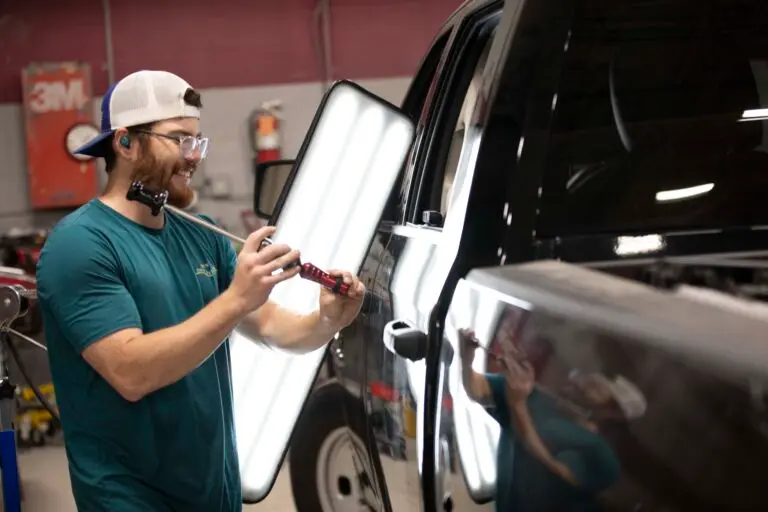
A lot of people walk in expecting the worst. They’ve got a door ding or a crease from a parking lot and they assume it means paint, refinishing, and a bill that doesn’t feel proportionate to the size of the damage.
When the paint is intact and the dent is shallow, the metal can often be worked back into shape without touching the finish at all. The repair costs less, takes less time, and leaves your original paint untouched. But the only way to know if that applies to your dent is to have someone look at it.
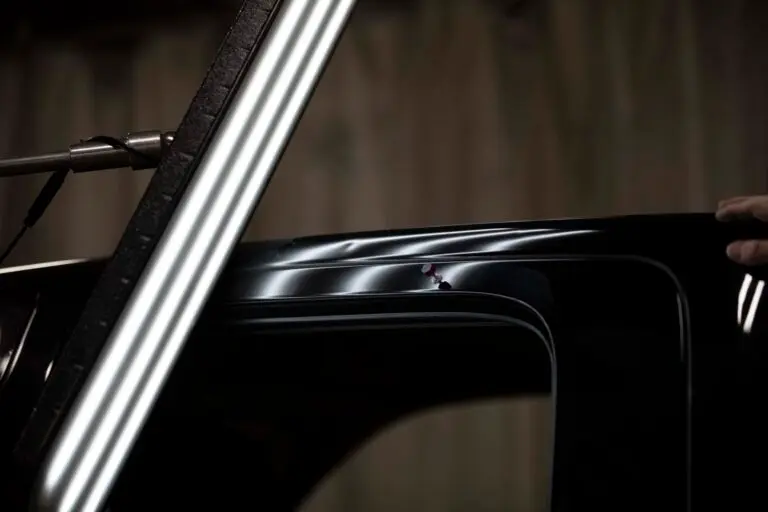
There’s no way to determine if PDR is the right call from a photo or a description. You have to see the dent in person. We look at the damage up close and give you a straight answer about what the repair actually requires.
Some dents are good candidates for PDR. Others aren’t. If the paint has cracked or the metal has stretched beyond what PDR can address, conventional body repair is the right path. We’d rather tell you that upfront than take a job that isn’t going to give you the result you’re looking for.
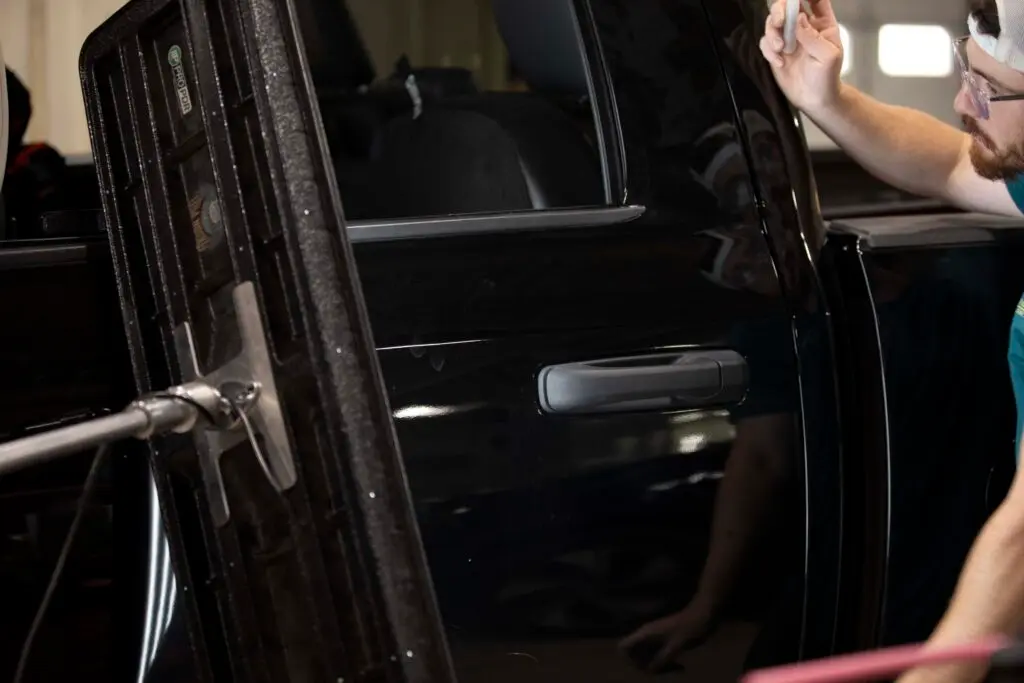
This is the part that matters most to a lot of customers. PDR restores the panel without repainting it. The factory finish stays exactly where it is.
For resale value, that’s a real difference. A car with its original factory paint is worth more than one that’s been repainted, even well. For customers who just want their car to stay as close to original as possible, PDR delivers that in a way conventional bodywork can’t.
Wherever you are in the metro, there’s a Collision Center 1 location nearby.