
SUMMARY
- Collision repair can affect cameras and driver-assist features when the impact or repair involves sensors, cameras, radar units, their mounting points, or surrounding components.
- Advanced Driver Assistance Systems, commonly called ADAS, can support features such as automatic emergency braking, adaptive cruise control, lane assistance, parking assistance, and blind-spot monitoring.
- Depending on the vehicle, ADAS components may be located in the windshield, front grille, bumpers, mirrors, and other areas commonly involved in collision repairs.
- A camera or sensor does not have to look broken to require attention. Changes to its position, angle, mounting bracket, or surrounding structure can matter.
- Repairs involving bumper removal, windshield replacement, suspension or alignment work, mirror replacement, or certain structural repairs may require technicians to check the manufacturer’s procedures for scanning or calibration requirements.
- Not every collision requires ADAS calibration. Requirements depend on the vehicle, equipment, damage, components removed or replaced, and OEM procedures.
- Diagnostic scanning and ADAS calibration are different procedures. A scan communicates with vehicle systems, while calibration helps specified sensors or cameras operate within required parameters.
- A dashboard with no warning lights does not automatically confirm that every ADAS component or mounting location is unaffected.
- The repair plan should be based on the specific year, make, model, equipment, collision damage, and manufacturer procedures rather than a universal calibration rule.
- Golden Valley drivers can have collision damage and potential ADAS-related repair requirements evaluated at Collision Center 1, 900 Florida Ave S, Golden Valley, MN 55426.
Your Car Has Cameras and Sensors. Does Collision Repair Affect Them?
Sometimes.
Modern vehicles can use cameras, radar, ultrasonic sensors, and other electronics to support driver-assistance features.
Depending on your vehicle, these features may include:
- Forward collision warning
- Automatic emergency braking
- Adaptive cruise control
- Lane departure warning
- Lane keeping assistance
- Blind-spot monitoring
- Parking assistance
Many of the components supporting these features are located in areas commonly damaged during an accident.
That means professional collision repair may need to consider more than:
- Dents
- Scratches
- Broken panels
- Paint
Technicians also need to ask:
“Are any cameras, sensors, or their mounting areas involved in this repair?”
Step 1: Understand What ADAS Means
ADAS stands for:
Advanced Driver Assistance Systems
These systems use technology to help drivers with certain driving and safety-related tasks.
The National Highway Traffic Safety Administration provides information about driver-assistance technologies available in modern vehicles.
Depending on the vehicle, ADAS may use information from:
- Cameras
- Radar
- Ultrasonic sensors
- Other electronic systems
The exact equipment varies considerably between vehicles.
Two cars that look similar from outside may have different driver-assistance technology.
Does ADAS Make the Car Self-Driving?
Not necessarily.
Many common driver-assistance systems are designed to assist the driver, not replace the driver’s responsibility for operating the vehicle.
For example, a vehicle might provide:
- Warning when another vehicle is in a blind spot
- Warning when approaching another vehicle too quickly
- Assistance maintaining lane position
- Automatic braking in certain circumstances
The specific capabilities depend on the vehicle and system.
Drivers should understand the features installed on their particular vehicle and continue to follow the manufacturer’s instructions for their use.
Step 2: Identify Where Cameras and Sensors Are Located
ADAS components are not all located in one place.
Depending on the vehicle, equipment can be positioned around the:
- Windshield
- Front grille
- Front bumper
- Rear bumper
- Side mirrors
- Vehicle corners
That creates an important collision repair question.
Did the accident or repair affect an area containing driver-assistance equipment?
A damaged component may be obvious.
But sometimes the sensor itself appears normal while the surrounding mounting area has moved.
Why Does Sensor Location Matter?
Imagine a front-end collision.
The visible damage might include:
- Cracked bumper
- Broken grille
- Dented hood
But a vehicle may also have radar equipment mounted behind or near those components.
Likewise, a sideswipe may damage:
- Mirror
- Door
- Rear bumper corner
Depending on the vehicle, those areas may contain equipment associated with driver-assistance features.
The technician therefore needs to understand both:
- Physical collision damage
- Technology installed in that area
Step 3: Check Whether the Windshield Is Involved
Many vehicles use a forward-facing camera mounted near the upper windshield area.
That camera may support features such as:
- Lane departure warning
- Lane keeping assistance
- Forward collision-related functions
If the windshield is damaged during an accident, glass replacement may become part of the repair.
Collision Center 1 provides auto glass repair for collision-related glass concerns.
Technicians should determine whether the vehicle has a windshield-mounted camera and what the manufacturer requires when the glass or related equipment is disturbed.
Does Windshield Replacement Always Require ADAS Calibration?
No.
Requirements depend on the:
- Vehicle
- Model year
- Installed equipment
- Camera system
- Manufacturer procedure
A vehicle without a windshield-mounted ADAS camera may have different requirements from one equipped with that technology.
When a camera is present, technicians should research the applicable OEM information instead of assuming calibration is always required or never required.
Step 4: Consider Front Bumper and Grille Repairs
The front bumper and grille are common collision-damage areas.
They can also be important locations for driver-assistance technology.
Depending on the vehicle, equipment in or around the front of the vehicle may support:
- Adaptive cruise control
- Forward collision warning
- Automatic emergency braking
- Parking assistance
A collision can potentially affect:
- Sensor
- Sensor bracket
- Grille
- Bumper mounting
- Nearby structure
That means repairing the visible bumper cover may not be the only consideration.
Can a Sensor Be Affected Without Being Broken?
Yes.
Physical condition is only one consideration.
Some ADAS components depend on a specific:
- Position
- Angle
- Orientation
- Mounting relationship
A sensor could appear intact while the bracket or mounting location around it has been affected by the collision.
Technicians should inspect the complete area rather than asking only whether the electronic component is visibly cracked.
Step 5: Consider Rear Bumper Damage
Rear bumpers can also contain electronic equipment.
Depending on the vehicle, systems around the rear corners may support:
- Parking assistance
- Blind-spot monitoring
- Rear cross-traffic-related functions
A rear-end or rear-corner collision can potentially affect:
- Sensors
- Wiring
- Mounting brackets
- Bumper components
Even when the bumper cover can be repaired, technicians may need to evaluate the equipment behind or around it.
Does Repainting a Bumper Affect Sensors?
It depends on the vehicle and system.
Some sensors operate through or around bumper-cover areas.
Manufacturers may provide specific requirements concerning:
- Repair
- Refinishing
- Material thickness
- Sensor areas
Technicians should check the applicable manufacturer information before assuming that every bumper can be repaired and refinished in exactly the same way.
The I-CAR Repairability Technical Support Portal provides resources that collision professionals can use when researching vehicle-specific repair procedures.
Step 6: Consider Side-Mirror Damage
A sideswipe can easily damage a mirror.
Modern mirrors may contain more than:
- Glass
- Housing
- Adjustment motor
Depending on the vehicle, the mirror can also include:
- Camera
- Blind-spot indicator
- Turn signal
- Heating element
- Other electronics
If the mirror is replaced or repaired, technicians should determine whether the vehicle manufacturer specifies any additional procedures.
Can a Replacement Mirror Require Calibration?
On some vehicles, a mirror may contain a camera or other equipment associated with driver-assistance technology.
Whether calibration or another setup procedure is required depends on:
- Vehicle
- Installed equipment
- Component replaced
- OEM instructions
This is another example of why the same-looking repair can have different requirements on different vehicles.
Step 7: Understand Why Wheel Alignment Can Matter
ADAS concerns are not limited to cameras and bumpers.
Certain vehicle systems rely on accurate information about:
- Vehicle direction
- Steering position
- Wheel alignment
If a collision damages a:
- Wheel
- Tire
- Suspension component
- Steering component
the repair may involve more than exterior bodywork.
Technicians should first identify and repair physical damage.
Then they can determine what additional procedures are required for that specific vehicle.
Does Getting a Wheel Alignment Automatically Mean ADAS Calibration Is Needed?
No.
The requirements vary by vehicle and system.
However, certain manufacturer procedures may connect alignment or suspension-related work with additional ADAS procedures.
The repair facility should check the manufacturer’s information rather than using a universal rule.
Step 8: Consider Structural Collision Damage
Structural repairs can potentially affect the position of components mounted to or near the repaired area.
For example, an impact could affect:
- Front structure
- Rear structure
- Pillars
- Mounting locations
If an ADAS component depends on those areas for its position, the repair plan may include additional checks or procedures.
This is one reason structural collision repair should not be treated as simply making the exterior panels line up again.
Why Can a Few Millimeters Matter?
Some driver-assistance components need to be positioned within manufacturer specifications.
A sensor can depend on a specific:
- Height
- Angle
- Direction
- Mounting position
Small physical changes that are difficult to notice visually can therefore matter.
Technicians should rely on appropriate:
- Measurements
- Repair procedures
- Calibration procedures
rather than visual appearance alone.
Step 9: Understand the Difference Between Scanning and Calibration
These terms are sometimes used as though they mean the same thing.
They do not.
Diagnostic Scanning
A diagnostic scan communicates with vehicle electronic systems.
It can help technicians identify:
- Diagnostic trouble codes
- System information
- Electronic concerns requiring further diagnosis
ADAS Calibration
Calibration is a procedure used when specified to help a camera, radar unit, or other system operate within the manufacturer’s required parameters after certain repairs or changes.
One procedure does not automatically replace the other.
A vehicle may require:
- Scanning
- Calibration
- Both
- Neither
depending on the repair and OEM procedures.
Does a Clean Diagnostic Scan Mean Calibration Is Not Necessary?
Not automatically.
A diagnostic scan and calibration answer different questions.
A scan may show whether certain systems have stored trouble information.
Calibration addresses the positioning or operation of specified equipment when the manufacturer requires that procedure.
A vehicle could therefore have no obvious warning code while still having a manufacturer-required calibration procedure associated with the repair.
Step 10: Do Not Rely Only on Dashboard Warning Lights
After an accident, check your dashboard.
Pay attention to messages involving:
- Forward collision systems
- Lane assistance
- Blind-spot monitoring
- Parking assistance
- Cameras
- Other driver-assistance features
Photograph new warnings if possible.
But remember:
No warning light does not automatically mean no ADAS-related concern exists.
A collision can potentially affect:
- Bracket
- Mounting point
- Alignment
without creating an immediately obvious dashboard warning.
What if an ADAS Warning Appears and Then Disappears?
Tell the repair facility.
If possible, provide:
- Photograph
- Exact warning message
- When it appeared
- What happened immediately before it appeared
Diagnostic information can sometimes help technicians understand what the vehicle detected.
Do not assume a disappearing warning means the underlying condition should automatically be ignored.
Step 11: Research the Exact Vehicle’s OEM Procedures
OEM means Original Equipment Manufacturer.
Manufacturers publish information that can specify when procedures such as:
- Diagnostic scanning
- Camera calibration
- Radar calibration
- Aiming
- Initialization
are required.
The correct requirement may depend on:
- Make
- Model
- Model year
- Equipment
- Repair performed
Collision Center 1 maintains multiple OEM certifications across its repair network.
Make-specific research helps technicians build the repair plan around the actual vehicle instead of relying on a general assumption about ADAS.
Why Can’t the Shop Use the Same Calibration Rule for Every Vehicle?
Because manufacturers design their systems differently.
Even within the same manufacturer, requirements can change between:
- Models
- Model years
- Equipment packages
One vehicle might require calibration after a particular component is replaced.
Another might use:
- Different sensor
- Different mounting position
- Different procedure
The repair facility should verify the procedure for the specific vehicle.
Step 12: Understand Static and Dynamic Calibration
Depending on the vehicle, calibration procedures can vary.
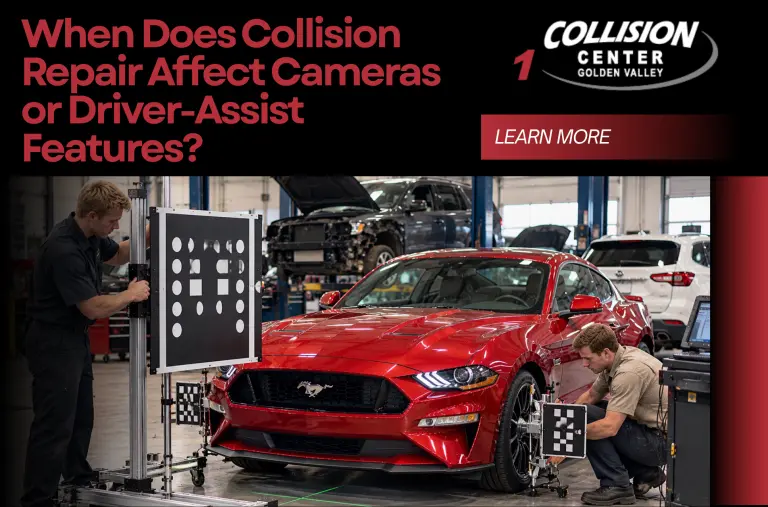
Some systems may use a static calibration, which can involve specialized targets or equipment while the vehicle remains stationary.
Other systems may use a dynamic calibration, which can involve operating the vehicle under manufacturer-specified driving conditions.
Some vehicles may require a combination of procedures.
The exact process should follow the vehicle manufacturer’s instructions.
Can a Technician Just Test-Drive the Vehicle Instead?
A normal test drive and a manufacturer-required calibration are not necessarily the same thing.
If the manufacturer specifies a particular:
- Target
- Setup
- Scan tool
- Driving condition
- Procedure
those requirements should guide the calibration.
A general road test can still be part of repair verification when appropriate, but it should not automatically replace a required calibration procedure.
Step 13: Understand Why Calibration Conditions Matter
ADAS calibration can require specific conditions.
Depending on the vehicle and procedure, requirements may involve:
- Tire pressure
- Vehicle ride height
- Wheel alignment
- Fuel level
- Vehicle loading
- Floor level
- Target positioning
- Lighting
- Clear driving conditions
Not every procedure uses all of these conditions.
The important point is that calibration is a controlled procedure, not simply pressing a reset button.
Technicians should follow the requirements for the exact vehicle.
Step 14: Understand How Parts Can Affect ADAS Repairs
Collision repair sometimes requires replacing components around sensors.
These might include:
- Bumper cover
- Grille
- Windshield
- Mirror
- Sensor bracket
Parts selection can matter when a component:
- Holds a sensor
- Sits in front of a sensor
- Determines sensor position
- Interacts with a camera
Technicians should research applicable OEM information when determining which components are appropriate for the repair.
Does Replacing a Sensor Automatically Solve the Problem?
No.
If a sensor is damaged and requires replacement, installing the new component may only be one part of the repair.
Depending on manufacturer requirements, additional steps may include:
- Programming
- Initialization
- Calibration
- Diagnostic scanning
The surrounding mounting area may also need to be verified.
Replacing the electronic component without addressing damaged mounting can leave part of the collision damage unresolved.
Step 15: Understand Why the Estimate Can Change After Disassembly
ADAS-related damage is not always visible during the initial estimate.
For example:
Initial inspection:
- Cracked front bumper
- Damaged grille
After disassembly:
- Broken sensor bracket
- Damaged wiring
- Additional mounting damage
The repair facility may then update the estimate.
If insurance is involved, the additional work may be documented through a supplemental estimate.
This does not automatically mean the original estimate was inaccurate.
The additional damage may simply have been hidden behind exterior components.
Step 16: Understand How Insurance Fits Into ADAS Repair
When insurance is involved, the repair facility may communicate with the insurer about additional procedures discovered during the repair.
That communication can involve:
- Damage photos
- Supplemental estimate
- OEM procedure information
- Diagnostic procedures
- Calibration requirements
Collision Center 1 provides insurance claim assistance to help customers navigate communication during collision repairs.
The Minnesota Department of Commerce also provides consumer information about auto insurance and claims.
What if Calibration Is Not on the Insurance Company’s Initial Estimate?
Ask the repair facility whether calibration is required for your particular repair.
The initial insurance estimate may have been written before:
- Disassembly
- Complete damage identification
- OEM procedure research
If a required procedure is identified later, the shop can document why it has been added to the repair plan.
Ask:
“What manufacturer procedure requires this calibration?”
That gives you a specific reason rather than a generic answer.
Step 17: Ask for Calibration Documentation
When calibration is part of your repair, ask what documentation is available.
Depending on the equipment and procedure, documentation may provide information about:
- Vehicle
- System
- Procedure performed
- Results
Keep this information with your:
- Final invoice
- Repair estimate
- Supplements
- Other repair records
Documentation gives you a clearer record of what was performed during the collision repair.
What Should You Ask the Repair Shop About ADAS?
Useful questions include:
- Does my vehicle have cameras or sensors in the damaged area?
- Was any sensor or camera removed?
- Was a mounting bracket damaged?
- Does the manufacturer require diagnostic scanning?
- Does the manufacturer require calibration?
- What type of calibration is required?
- Was wheel alignment necessary?
- Is calibration documentation available?
- Are there any remaining warning messages?
You do not need to understand how the calibration equipment works.
You should understand why the procedure is or is not part of your repair.
Step 18: Check Driver-Assist Features When You Pick Up the Vehicle
Before leaving the repair facility, look for unexpected dashboard warnings.
If the repair affected related components, ask whether the shop has completed all required:
- Scanning
- Calibration
- System checks
Do not intentionally create a dangerous driving situation to test automatic braking or another safety feature yourself.
Instead, ask the repair facility:
- What procedures were performed?
- Were there any unresolved diagnostic concerns?
- What documentation is available?
Keep those records with your repair paperwork.
What Collision Repairs Are More Likely to Involve ADAS?
It depends on the vehicle, but additional ADAS research may be especially relevant when repairs involve areas such as:
- Windshield
- Front bumper
- Front grille
- Rear bumper
- Side mirror
- Suspension
- Steering
- Structural mounting locations
This does not mean every repair in these areas requires calibration.
It means these areas can contain or affect components used by driver-assistance systems, so technicians should check the applicable OEM requirements.
Frequently Asked Questions
When can collision repair affect vehicle cameras or sensors?
Collision repair can affect cameras or sensors when the impact or repair involves the component itself, its mounting bracket, surrounding structure, windshield, bumper, mirror, or another area important to its position or operation.
Does every collision require ADAS calibration?
No. Calibration requirements depend on the vehicle, installed equipment, damage, components removed or replaced, repair operations, and applicable OEM procedures.
Can a camera or radar sensor be affected without looking damaged?
Yes. Some systems depend on precise positioning and mounting. A sensor can appear intact while its bracket or surrounding mounting area has been affected.
Is diagnostic scanning the same as ADAS calibration?
No. Diagnostic scanning communicates with electronic systems and can identify stored information or trouble codes. Calibration is a separate procedure used when specified to establish or verify the operation of certain cameras or sensors.
Can windshield replacement affect driver-assistance features?
Yes, on vehicles with windshield-mounted cameras or related equipment. Technicians should check the manufacturer procedures to determine whether additional calibration or other steps are required.
Can bumper repair affect parking or driver-assistance sensors?
Potentially. Some vehicles have radar, ultrasonic sensors, or other equipment in or around the bumpers. The sensor and its mounting area should be considered during the repair.
Does no dashboard warning mean my ADAS system is fine after a collision?
Not necessarily. The absence of a warning is useful information, but it does not confirm that every sensor, bracket, mounting point, or calibration requirement is unaffected.
Where can Golden Valley drivers have collision damage involving cameras or driver-assist systems evaluated?
Golden Valley drivers can visit Collision Center 1 at 900 Florida Ave S, Golden Valley, MN 55426 for professional collision damage assessment and repair.
Make Cameras and Driver-Assist Systems Part of the Repair Conversation in Golden Valley
Modern collision repair involves more than restoring:
- Dents
- Scratches
- Paint
- Panel alignment
When a vehicle contains cameras, radar, or other driver-assistance equipment, technicians also need to understand whether the collision or repair affected those systems.
That can mean checking:
- Sensor condition
- Camera condition
- Mounting points
- Diagnostic information
- OEM procedures
- Calibration requirements
Not every accident requires ADAS calibration.
But required procedures should not be overlooked simply because the camera or sensor looks undamaged or the dashboard has no warning light.
The correct approach is to identify the exact vehicle, installed equipment, damaged components, repair operations, and manufacturer requirements.
Golden Valley drivers can learn more about Collision Center 1’s auto body repair, collision repair, and OEM certifications, or visit the Golden Valley location to have collision damage professionally evaluated.
Collision Center 1 – Golden Valley
900 Florida Ave S Golden Valley, MN 55426