
SUMMARY
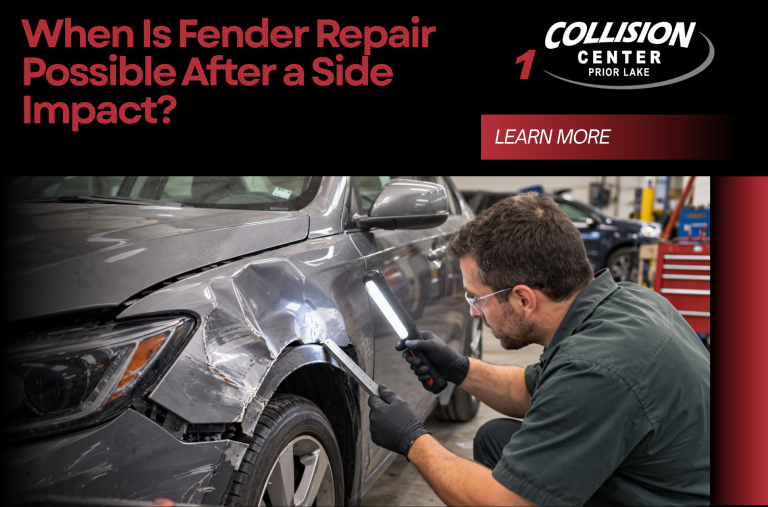
- A damaged fender does not automatically need replacement after a side impact. Many fenders can be repaired when the metal remains suitable for reshaping and the damage is limited to a repairable area.
- Repairability depends on the depth and location of the dent, metal stretching, creases, paint condition, panel material, and damage around mounting points or edges.
- Minor dents with intact paint may sometimes qualify for paintless dent repair (PDR).
- Conventional auto body repair may be appropriate when the fender can be reshaped but also needs surface preparation and refinishing.
- Fender replacement becomes more likely when the panel has severe folds, torn metal, extensive stretching, badly damaged mounting points, or damage that cannot be restored appropriately.
- A side impact can affect more than the fender. Technicians may also need to inspect the wheel, tire, suspension, door, bumper, headlight, inner structure, and nearby mounting points.
- Changes in steering, tire clearance, panel gaps, or door operation can indicate that the collision affected components beyond the exterior fender.
- The repair-versus-replacement decision should consider the actual damage and applicable OEM repair procedures, rather than appearance alone.
- If insurance is involved, additional hidden damage discovered after disassembly may result in a supplemental estimate.
- Prior Lake drivers can have side-impact and fender damage evaluated at Collision Center 1, 16111 Main Ave SE, Prior Lake, MN 55372.
Your Fender Was Damaged in a Side Impact. Can It Be Repaired?
Sometimes.
A side impact can leave a fender:
- Dented
- Creased
- Scraped
- Pushed inward
- Misaligned
- Cracked through the paint
The damage may look severe enough that replacement seems inevitable.
But appearance alone does not determine whether a fender can be repaired.
Professional auto body repair starts by evaluating:
- Damage severity
- Damage location
- Metal condition
- Paint condition
- Panel material
- Mounting points
- Surrounding components
The question is not simply:
“How big is the dent?”
A better question is:
“Can this particular fender be restored appropriately without replacing it?”
Step 1: Determine What Type of Fender Damage Occurred
Not all fender damage is the same.
One vehicle might have:
- Shallow dent
Another could have:
- Deep crease
- Folded edge
- Torn metal
- Damaged mounting point
Those conditions require different repair approaches.
Technicians first need to understand what happened to the panel during the impact.
What Fender Damage Is More Likely to Be Repairable?
Repair may be possible when the damage involves:
- Moderate denting
- Limited creasing
- Repairable surface distortion
- Accessible damage
- Metal that has not been excessively stretched
- Mounting areas that remain repairable
Paint condition also matters.
If the paint remains intact, some damage may potentially qualify for paintless dent repair.
If the paint is damaged, conventional body repair may still be possible.
Step 2: Check Whether the Paint Is Still Intact
Look closely at the damaged area.
Do you see:
- Cracked paint?
- Chipping?
- Exposed primer?
- Bare metal?
- Deep scratches?
Paint condition can influence the repair method.
If the paint remains intact and the dent is suitable, paintless dent repair may be considered.
PDR allows technicians to reshape suitable damage while preserving the existing finish.
But intact paint does not automatically mean PDR will work.
The shape and severity of the damage still matter.
Can Paintless Dent Repair Fix a Fender After a Side Impact?
Sometimes.
PDR may be appropriate when:
- Paint remains intact
- Metal has not been excessively stretched
- Dent shape is suitable
- Technician can access the damaged area
- Panel material allows the repair
Side-impact damage can be more complicated than a small parking-lot ding.
A sharp crease or heavily distorted wheel opening may fall outside the practical limits of PDR.
In those situations, conventional body repair may be considered instead.
Is PDR Always the Best Choice if the Paint Is Not Cracked?
No.
Preserving the original finish can be beneficial when the damage is appropriate for PDR.
But the repair method should match the actual damage.
A technician should not force a deeply stretched or severely creased panel into a paintless repair simply to avoid refinishing.
The goal is an appropriate repair, not automatically the least invasive technique.
Step 3: Determine Whether the Metal Has Stretched
Metal stretching can influence whether a fender remains repairable.
During an impact, sheet metal can:
- Bend
- Dent
- Fold
- Stretch
A broad, smooth dent may sometimes be easier to restore than a smaller but extremely sharp crease.
Technicians consider:
- Depth
- Shape
- Sharpness
- Impact direction
- Panel material
- Surrounding distortion
If the metal has been excessively stretched, repairing the original fender may become less practical.
Does a Deep Fender Dent Automatically Require Replacement?
No.
Depth is only one factor.
A deep but relatively smooth dent may sometimes remain repairable.
A smaller area could be more difficult if it includes:
- Sharp folding
- Torn metal
- Severe stretching
- Damaged edge
- Damaged mounting location
That is why photographs alone may not provide enough information to make the final repair-versus-replacement decision.
Step 4: Look Closely at the Wheel Opening
The wheel opening is an important area after a side impact.
Inspect the fender around the tire.
Look for:
- Metal pushed toward the tire
- Reduced tire clearance
- Bent wheel-opening edge
- Loose liner
- Missing fasteners
- Tire rubbing
Do not continue driving normally if the tire is contacting damaged bodywork.
A rotating tire rubbing against the fender or liner can create additional damage.
Why Is Tire Clearance Important After Fender Damage?
The tire needs adequate clearance as it:
- Rotates
- Turns
- Moves with the suspension
A damaged fender pushed into the wheel opening can interfere with that movement.
The problem may become worse when:
- Turning
- Driving over bumps
- Suspension compresses
Even if the vehicle appears drivable while parked, check for adequate clearance before assuming it is safe for normal use.
Step 5: Inspect the Wheel and Tire
A side impact strong enough to damage the fender may also reach the wheel or tire.
Look for:
- Tire cuts
- Sidewall damage
- Bent wheel
- Cracks
- Wheel sitting unusually in the opening
While driving, if the vehicle is safe to move, pay attention to:
- Vibration
- Pulling
- Steering changes
- New noises
These symptoms can indicate that the collision involved more than the exterior panel.
Does Fender Damage Mean the Suspension Is Damaged?
Not necessarily.
A fender can be damaged without affecting the suspension.
However, a side impact near the wheel deserves additional attention because collision forces may also reach:
- Wheel
- Tire
- Steering components
- Suspension components
The vehicle should be evaluated based on the actual impact rather than assuming the problem begins and ends with the fender.
Step 6: Check Whether the Steering Feels Different
If the vehicle remains safe to drive, pay attention to how it handles.
Watch for:
- Vehicle pulling left or right
- Steering wheel sitting off-center
- Vibration
- Unusual steering resistance
- New noises
Do not assume that a post-collision steering problem automatically means the vehicle only needs an alignment.
Physical damage should first be ruled out.
Why Isn’t an Alignment Always the First Repair?
Alignment adjusts wheel geometry.
It does not repair a physically damaged:
- Wheel
- Steering component
- Suspension component
- Structural mounting location
If the side impact damaged one of those components, the underlying damage should be addressed before final alignment.
The exterior fender repair may be only one part of the complete collision repair.
Step 7: Check the Fender-to-Door Gap
Look at the space between the damaged fender and the front door.
Compare it with the opposite side of the vehicle when possible.
Watch for:
- Fender touching the door
- Gap becoming unusually narrow
- Gap becoming unusually wide
- Fender protruding outward
- Fender pushed inward
Carefully open the door if it is safe to do so.
If the door contacts the damaged fender, avoid repeatedly forcing it open.
That can create additional damage.
Can a Bent Fender Make the Door Difficult to Open?
Yes.
A fender that has shifted backward can interfere with the leading edge of the door.
But door interference does not automatically mean the door itself is damaged.
The problem could involve:
- Fender deformation
- Fender mounting
- Door alignment
- Underlying mounting points
A professional inspection can identify what moved and why.
Step 8: Check the Fender-to-Hood and Fender-to-Bumper Gaps
A front fender connects visually and physically with several neighboring components.
Look at the gaps around the:
- Hood
- Bumper
- Headlight
- Door
A side impact may change how these panels fit together.
Uneven gaps can indicate:
- Bent fender
- Damaged bracket
- Shifted mounting point
- Damage to an adjacent component
They are clues that help technicians determine how far the impact traveled.
Do Uneven Panel Gaps Always Mean Structural Damage?
No.
An uneven gap can result from local panel damage.
For example, the fender itself may simply have shifted.
In other situations, the collision may have affected an underlying mounting location or structure.
Professional inspection and measurement are needed to determine the cause.
Do not diagnose structural damage from panel gaps alone.
Step 9: Inspect the Headlight Area
The front edge of a fender often meets the headlamp and bumper.
A side impact can potentially damage:
- Headlamp housing
- Mounting tabs
- Brackets
- Wiring
- Adjacent bumper mounting
A headlight may still turn on even when its mounting points are broken.
Look for:
- Lamp sitting differently
- Large gaps
- Movement
- Cracked lens
- Moisture
- Light pointing differently
Mention those concerns during the estimate.
Step 10: Determine Whether Conventional Fender Repair Is Possible
A fender that cannot be repaired with PDR may still be repairable through conventional bodywork.
Depending on the damage, technicians may:
- Reshape the metal
- Correct surface irregularities
- Prepare the repair area
- Restore required corrosion protection
- Refinish the panel
The exact procedure depends on:
- Damage
- Panel material
- Vehicle
- Manufacturer repair information
Conventional repair can therefore provide an option between PDR and complete fender replacement.
What Is the Difference Between PDR and Conventional Fender Repair?
Paintless dent repair:
- Reshapes suitable dents
- Preserves the existing finish
- Avoids conventional refinishing when successful
Conventional body repair:
- Restores repairable panel damage
- Prepares the repaired surface
- Includes refinishing when required
Neither approach is automatically better.
The appropriate method depends on the fender’s condition.
Step 11: Determine When Fender Replacement Makes More Sense
Some fenders are too severely damaged for an appropriate repair.
Replacement may become more likely when the panel has:
- Torn metal
- Extreme folds
- Severe stretching
- Extensive edge damage
- Major mounting-point damage
- Damage that cannot be appropriately restored
Manufacturer information can also affect the decision.
Ask the estimator:
“Why are you recommending replacement instead of repairing this fender?”
The answer should be based on the panel’s actual condition and repair requirements.
Is Fender Replacement Always More Expensive Than Repair?
Not necessarily.
Repair cost depends on:
- Labor required
- Damage severity
- Refinishing
- Panel material
Replacement cost can depend on:
- Part price
- Availability
- Installation labor
- Refinishing
- Related components
A heavily damaged fender could require enough repair labor that replacement becomes a practical option.
The repair-versus-replacement decision should not be made from part price alone.
Step 12: Identify What Material the Fender Is Made From
Not every modern fender is made from the same material.
Depending on the vehicle, exterior panels may use:
- Steel
- Aluminum
- Composite materials
Material influences repair techniques.
For example, aluminum behaves differently from conventional steel and can require specialized:
- Tools
- Equipment
- Techniques
Technicians should identify the panel material before determining the repair method.
Can an Aluminum Fender Be Repaired?
Sometimes.
Repairability depends on:
- Damage severity
- Location
- Material condition
- Accessibility
- Manufacturer procedures
Aluminum requires different repair considerations than conventional steel.
A repair method appropriate for a steel fender should not automatically be applied to an aluminum panel.
Step 13: Ask About Damage Behind the Fender
The fender is an exterior panel.
Damage behind it may not be visible until technicians gain additional access.
Depending on the impact, technicians may inspect:
- Mounting brackets
- Inner structure
- Wiring
- Wheel-well components
- Adjacent mounting locations
This is particularly important when the fender has been pushed significantly inward.
The visible dent may represent only part of the collision damage.
What Is Hidden Damage After a Side Impact?
Hidden damage is collision-related damage that cannot be completely identified during the exterior inspection.
For example:
Visible damage:
- Dented fender
- Scratched bumper
After disassembly:
- Broken mounting bracket
- Damaged inner component
- Additional wheel-well damage
This is one reason an initial repair estimate can change after technicians begin disassembly.
Step 14: Ask Whether OEM Repair Procedures Affect the Decision
OEM means Original Equipment Manufacturer.
Manufacturers publish repair information that can influence:
- Repair versus replacement
- Panel procedures
- Materials
- Fasteners
- Corrosion protection
- Scanning
- Calibration
I-CAR provides Repairability Technical Support resources that collision professionals can use to research vehicle-specific repair information.
Collision Center 1 also maintains multiple OEM certifications across its repair network.
The repair approach should match the specific vehicle rather than relying on a one-size-fits-all method.
Step 15: Consider Whether ADAS Components Are Near the Damage
Modern vehicles can contain driver-assistance components around the front corners.
Depending on the model, these can include:
- Parking sensors
- Radar
- Cameras
- Other electronic components
The National Highway Traffic Safety Administration explains that Advanced Driver Assistance Systems can support features such as:
- Automatic emergency braking
- Forward collision warning
- Blind-spot warning
- Lane assistance
- Adaptive cruise control
A damaged fender does not automatically mean an ADAS component has been affected.
The location and extent of the collision determine what needs inspection.
Does Fender Repair Automatically Require ADAS Calibration?
No.
Calibration requirements depend on:
- Vehicle
- Installed equipment
- Impact location
- Components removed
- Components replaced
- OEM procedures
A straightforward fender repair may not require calibration.
A repair involving related cameras, radar, sensors, or other specified components may have different requirements.
Calibration should be performed when required by the applicable repair procedure.
Step 16: Get a Professional Damage Assessment
Once immediate safety concerns have been addressed, have the side-impact damage professionally evaluated.
Explain:
- How the collision occurred
- Where the vehicle was hit
- Whether the wheel was struck
- Whether steering changed
- Whether the door rubs
- Whether warning lights appeared
- Whether you hear new noises
Those details can help the estimator determine what areas deserve additional inspection.
Prior Lake drivers can begin through the Collision Center 1 Prior Lake location.
What Should You Ask During the Fender Repair Estimate?
Useful questions include:
- Can this fender be repaired?
- Is PDR appropriate?
- Has the metal stretched significantly?
- Is the paint damaged?
- Are the mounting points intact?
- Did the wheel or suspension take any impact?
- Is anything damaged behind the fender?
- What material is the fender?
- What do the OEM procedures require?
- Why are you recommending repair or replacement?
You do not need to be a body technician to ask useful questions.
A professional estimate should help you understand the reasoning behind the proposed repair.
Step 17: Understand Why the Estimate May Change After Disassembly
The initial estimate is based on what technicians can reasonably identify before damaged components are removed.
Additional collision damage can become visible later.
For example:
Initial inspection:
- Dented fender
- Damaged paint
After disassembly:
- Broken mounting bracket
- Damaged wheel-well component
- Additional adjacent damage
The repair facility may document these findings through a supplemental estimate.
That does not automatically mean the original estimate was inaccurate.
The additional damage may simply have been hidden.
Step 18: Contact Your Insurance Company if You Plan to File a Claim
If the fender damage resulted from a covered collision, report the loss according to your insurer’s process.
Keep:
- Accident photos
- Claim number
- Initial estimate
- Supplements
- Other relevant documentation
Collision Center 1 provides insurance claim assistance to help customers navigate communication during collision repairs.
The Minnesota Department of Commerce also provides consumer information about auto insurance claims.
Ask questions if the repair plan changes after additional damage is discovered.
Does Insurance Decide Whether the Fender Gets Repaired or Replaced?
The insurer reviews the claim and determines what it will pay according to the policy and claim process.
The technical repair plan should also consider:
- Actual damage
- Panel material
- Vehicle construction
- OEM repair information
If repair and replacement options are being discussed, ask the shop to explain why one method is appropriate for your vehicle.
Understanding the technical reason makes the estimate easier to evaluate.
What if the Fender Damage Looks Cosmetic?
It may be.
A scrape or shallow dent can sometimes affect only:
- Paint
- Exterior panel
But be more cautious when the collision also involved:
- Wheel
- Tire
- Door
- Headlight
- Bumper
A side impact can transfer force beyond the most obvious exterior damage.
Having the vehicle evaluated can help determine whether the problem is truly cosmetic.
Can You Keep Driving With a Dented Fender?
Sometimes, but it depends on the damage.
Avoid unnecessary driving when:
- Fender rubs against tire
- Tire is damaged
- Wheel is damaged
- Steering feels different
- Body panel is loose
- Headlight is damaged
- Door no longer operates correctly
- Warning message appears
If the dent is confirmed to be cosmetic and does not interfere with vehicle operation, you may have more flexibility in scheduling the actual repair.
The important step is determining which situation you have.
Can You Repair a Fender Yourself?
Minor cosmetic damage can tempt drivers to try:
- Suction tools
- Dent pullers
- Heating methods
But side-impact damage can involve more than the visible dent.
Improper attempts can potentially:
- Crack paint
- Stretch metal
- Create high spots
- Damage body lines
- Make professional repair more difficult
For substantial side-impact damage, getting a professional assessment first can help you understand whether the panel is actually suitable for repair.
What Should You Check After Fender Repair?
Before leaving the repair facility, look at:
- Fender shape
- Paint appearance
- Panel gaps
- Wheel-opening clearance
Also confirm:
- Door opens normally
- Hood operates normally
- Headlight sits correctly
- Tire does not contact the fender
If the collision involved the wheel or suspension, ask whether any related inspection or alignment documentation applies.
Keep your repair paperwork for future reference.
Frequently Asked Questions
Can a dented fender be repaired instead of replaced?
Yes. Many fenders can be repaired when the metal remains suitable for restoration and the damage has not severely affected edges, mounting points, or other important areas.
Can PDR repair fender damage after a side impact?
Sometimes. PDR may be appropriate when the paint remains intact, the metal is not excessively stretched, and the dent’s shape, location, material, and accessibility make paintless repair suitable.
Does cracked paint mean the fender needs replacement?
No. Cracked paint generally means a purely paintless repair is not appropriate, but conventional auto body repair and refinishing may still be possible.
Can a side impact damage the suspension behind a dented fender?
Yes, particularly if the wheel or tire was struck. Pulling, vibration, changed steering, or an unusual wheel position should be professionally evaluated.
Does an uneven fender-to-door gap mean my vehicle has structural damage?
Not necessarily. The fender itself or a mounting point may have shifted. Professional inspection and measurement are needed to determine the cause.
When does a damaged fender usually need replacement?
Replacement becomes more likely with severe metal stretching, torn material, extreme folding, extensive edge damage, badly damaged mounting points, or other conditions that prevent an appropriate repair.
Does fender repair always require ADAS calibration?
No. Calibration depends on the vehicle, installed systems, affected components, repair operations, and applicable OEM procedures.
Where can Prior Lake drivers have side-impact fender damage inspected?
Prior Lake drivers can visit Collision Center 1 at 16111 Main Ave SE, Prior Lake, MN 55372 for professional auto body and collision damage assessment.
Have Side-Impact Fender Damage Professionally Evaluated in Prior Lake
A dented or creased fender does not automatically need replacement.
Depending on the damage, the repair could involve:
- Paintless dent repair
- Conventional auto body repair
- Fender replacement
The correct choice depends on more than the size of the dent.
Technicians should also evaluate:
- Metal condition
- Paint
- Panel material
- Wheel clearance
- Mounting points
- Adjacent panels
- Hidden damage
- Applicable manufacturer procedures
Most importantly, a side impact should not be treated as a cosmetic fender problem until damage to the wheel, tire, suspension, door, headlight, and surrounding components has been considered.
The goal is not to save the original fender at any cost.
It is also not to replace a panel that can be appropriately repaired.
The goal is to choose the repair method that fits the actual vehicle and damage.
Prior Lake drivers can learn more about Collision Center 1’s auto body repair, collision repair, or visit the Prior Lake location to have side-impact damage professionally evaluated.
Collision Center 1 – Prior Lake
16111 Main Ave SE Prior Lake, MN 55372