
SUMMARY
- Auto body paint preparation and refinishing restore a vehicle’s appearance and its protective coatings after a collision, and the work involves far more than spraying a new coat of color.
- Technicians start with a damage inspection so they know which panels need repair, which need replacement, and which surfaces need refinishing.
- Surface preparation, including cleaning, sanding, and correcting imperfections, gives the new coating system a sound base for adhesion.
- The correct primer helps support adhesion, a uniform surface, and corrosion resistance where the product is designed for it.
- Color matching relies on the manufacturer’s paint code, formula variants, test panels, and careful comparison with the existing finish.
- Basecoat provides the color, while clearcoat adds gloss and helps protect the finish from the environment.
- Some repairs call for blending color into an adjacent panel so the repaired area does not stand out.
- Controlled booth conditions, proper flash times, and the specified curing process all affect the final finish.
- A final quality inspection checks color, gloss, texture, and coverage before the vehicle goes home.
- Minnesota road salt and moisture make restoring damaged coatings especially important for Prior Lake drivers.
- Collision Center 1 Prior Lake provides auto body repair and refinishing at 16111 Main Ave SE, Prior Lake, MN 55372, and every repair carries a limited lifetime warranty on work and paint for as long as you own the vehicle.
Introduction
After a collision, most drivers notice the dent first.
Then they notice the paint, and that is where paint preparation and refinishing come in.
Paint preparation and refinishing are the steps that bring a repaired panel back to a finish that looks right and protects the metal underneath. Without them, even a perfectly straightened panel would leave bare or damaged surfaces exposed.
Automotive paint does more than add color. A complete paint system also helps shield the underlying material from:
- Moisture
- Road salt and deicing chemicals
- Ultraviolet light
- Dirt and road debris
- Other environmental contaminants
When a collision damages a panel, the original finish may crack, chip, peel, or stretch. Repairing or replacing the panel is only part of the job. Technicians still need to prepare the surface, choose compatible materials, match the color, and apply each layer correctly.
That is why professional paint preparation and refinishing follow a deliberate sequence instead of a single quick step.
For drivers in Prior Lake, Savage, Shakopee, and the surrounding south metro, Collision Center 1 Prior Lake provides professional auto body repair that includes refinishing after collision damage.
This guide walks through each stage of the process so you know what to expect when your vehicle needs paint work.
Why Does Paint Preparation and Refinishing Matter After Auto Body Repair?
Because the finish is part of the repair, not an afterthought.
A properly applied coating system protects the panel, and it also determines how the repair looks next to the rest of the vehicle. If a shop rushes preparation, problems such as peeling, poor color match, or visible repair edges can show up later.
Good paint preparation and refinishing aim to restore three things:
- Appearance that blends with the surrounding panels
- Adhesion so the new coatings stay bonded
- Protection for the material beneath the paint
Each stage of paint preparation and refinishing builds on the one before it. As a result, a shortcut early in the process can affect the final finish.
What Happens Before Paint Preparation Begins?
First, technicians assess the damage and plan the repair.
They decide whether to repair or replace each panel, and they identify every surface that will need refinishing. The plan may also account for adjacent panels, the condition of the existing paint, and any manufacturer requirements.
During this inspection, technicians may look for:
- Scratches and paint chips
- Dents and panel deformation
- Cracked or peeling paint
- Exposed metal
- Signs of previous refinishing
- Damaged panel edges
- Corrosion
- Color differences on neighboring panels
This assessment shapes the entire paint preparation and refinishing plan, including how many panels need work.
Why Must Body Repairs Be Finished Before Painting?
Paint cannot fix a dent.
It also cannot correct structural deformation or a bent mounting point. Technicians therefore repair or replace the damaged panel first, and only then move on to refinishing.
If paint went on before the panel was right, the coating would simply reveal the remaining waves or misalignment, and the repair would need to be redone.
Does Every Damaged Panel Need Complete Refinishing?
No.
The refinishing area depends on the type of damage, the paint system, and the repair procedure. A shallow scratch on one section may require a smaller repair area than a crease that runs across the whole panel.
However, technicians also consider how the repaired area will look beside the original finish. In some cases, that means refinishing more of the panel, or blending into the next one, so the color transition is not noticeable.
How Is a Vehicle Prepared for Auto Body Painting?
Surface preparation is one of the most important parts of paint preparation and refinishing.
New paint needs a clean, properly prepared surface to bond and to look smooth. The typical preparation sequence includes:
- Cleaning the damaged area to remove dirt, grease, and road film
- Evaluating the existing finish for cracks, corrosion, and earlier repairs
- Completing the necessary panel repairs
- Sanding the surface to the required profile
- Correcting minor surface imperfections with approved materials
- Applying the correct primer for the substrate
- Masking parts and surfaces that will not be painted
- Inspecting the prepared surface before color goes on
The exact order varies with the damage, the panel material, and the refinishing products. Still, every step serves the same goal: a sound foundation for the finish.
Why Is Cleaning So Important Before Automotive Painting?
During paint preparation and refinishing, even small amounts of contamination can interfere with adhesion or leave defects in the finish.
Common contaminants include:
- Road dirt
- Grease and oil
- Silicone residues
- Wax
- Moisture
- Sanding dust
For this reason, technicians clean the area before sanding as well as after. Cleaning first keeps contaminants from being ground into the surface or spread across the repair area.
Is Washing the Vehicle Enough to Prepare It for Paint?
Not usually.
A car wash removes loose dirt, but paint preparation and refinishing often call for specialized cleaners that remove wax, silicone, and oils. Technicians follow the cleaning steps the coating manufacturer specifies for the products they use.
How Does Sanding Prepare a Body Panel for Paint?
In paint preparation and refinishing, sanding removes damaged coating layers and creates a surface the next layer can grip.
Depending on the repair stage, sanding may help:
- Remove damaged paint and clearcoat
- Smooth repaired areas
- Taper damaged paint edges
- Prepare surfaces for primer
- Correct minor coating flaws
Technicians choose abrasives based on the material, the coating system, and the stage of the repair. In other words, the same sandpaper is not used for every step.
What Is Featheredging?
Featheredging gradually tapers the existing paint layers around a damaged spot.
Instead of leaving a sharp ledge where old paint meets bare metal or primer, the technician creates a smooth transition. That smooth transition helps prevent a visible outline from showing through the new finish later.
Can Improper Sanding Affect Paint Quality?
Yes.
Deep sanding scratches, uneven preparation, or removing too much material can all show up in the final finish. For example, coarse scratches that are not refined before primer may appear as lines once the clearcoat goes on.
Careful sanding is therefore a quiet but essential part of paint preparation and refinishing.
What Role Does Body Filler Play?
Body filler may smooth minor surface irregularities after the underlying damage has been properly repaired.
It is not a substitute for straightening or replacing a damaged panel. Its use depends on the damage and the approved repair method, and many repairs do not need it at all.
When technicians use filler, they shape it carefully to restore the panel’s original contour. Afterward, they prepare the surface for primer. Too much filler, or filler applied incorrectly, can affect durability and appearance.
Why Is Primer Applied Before Automotive Paint?
Primer is the bridge between surface work and color in paint preparation and refinishing. It prepares the repaired surface for the coats that follow.
Different primers serve different purposes, and the right choice depends on the substrate and the repair. Depending on the refinishing system, technicians may use:
- Corrosion-resistant primers
- Epoxy primers
- Primer surfacers
- Sealers
- Other manufacturer-approved products
Manufacturers design some primers to provide corrosion resistance when technicians apply them according to the specifications. Others mainly help create a smooth, uniform base for color.
Does Every Primer Work on Bare Metal?
No.
Each product has compatibility and substrate requirements, and technicians must follow them. Using the wrong primer, or skipping a required one, can contribute to adhesion problems or coating failure down the road.
For technical background on repair procedures and materials, the I-CAR Repairability Technical Support portal offers resources used across the collision repair industry.
How Do Auto Body Shops Match a Vehicle’s Paint Color?
Color matching takes more than reading the paint code.
Manufacturers assign codes to identify factory colors. However, the same code can have several formula variants, and age, sun exposure, and earlier repairs can change how a finish looks.
To match the color, technicians may use:
- The manufacturer’s paint code
- Paint formula databases and variant information
- Color reference chips
- Spray-out test panels
- Color measurement equipment
- Visual comparison under suitable lighting
Because of these variables, color matching is one of the most skilled steps in paint preparation and refinishing.
Why Can Two Vehicles With the Same Paint Code Look Different?
Production variation is one reason.
Factories may apply the same color slightly differently across plants or model years. Sun exposure, weather, and previous refinishing can also shift how a finish appears over time.
That is why technicians compare a proposed formula with the actual vehicle rather than relying on the code alone.
Why Are Spray-Out Test Panels Helpful?
A test panel lets the technician check a color before it goes on the car.
The technician sprays the proposed formula onto a card and compares it with the vehicle. If the shade is off, the technician can adjust the formula before the actual repair. This step reduces the risk of a visible mismatch.
Are Metallic and Pearl Colors Harder to Match?
Often, yes.
Metallic and pearlescent finishes contain particles that reflect light. Application technique affects how those particles settle, so the same formula can look lighter or darker depending on how the technician sprays it. As a result, these colors may need extra test panels or blending.
What Is the Difference Between Basecoat and Clearcoat?
Many modern vehicles use a basecoat and clearcoat system, and each layer has its own job.
- Basecoat provides the color and visual effects such as metallic or pearl.
- Clearcoat adds gloss and helps protect the color layer from the environment.
Automotive clearcoats are generally formulated to help protect against ultraviolet exposure, although performance varies by product. Both layers must go on correctly for the finish to look and perform as intended.
Can Clearcoat Damage Be Fixed Without Repainting the Color?
Sometimes.
Light clearcoat scratches may respond to approved finishing procedures. However, many clearcoat failures, such as peeling or deep damage, require more extensive paint preparation and refinishing that includes the color layer.
Why Is Paint Blending Sometimes Necessary?
A repaired panel can be the correct color and still look slightly different from its neighbors.
Blending gradually carries the new color into an adjacent area so the eye does not catch an abrupt change. It is especially common with:
- Door repairs next to fenders or quarter panels
- Fender repairs
- Quarter panel repairs
- Metallic finishes
- Pearl finishes
Not every repair needs blending. The decision depends on the color, the repair location, and the refinishing plan. For a deeper look at this step, see our guide on why an adjacent panel might need paint blending.
Does Paint Blending Mean an Undamaged Panel Is Being Repainted?
Partly.
Blending usually applies color to part of the neighboring panel and clearcoat over a wider area. The goal is not to repair that panel but to make the transition between old and new paint less visible. Your estimate should show any blend operations so you can see why the shop included them.
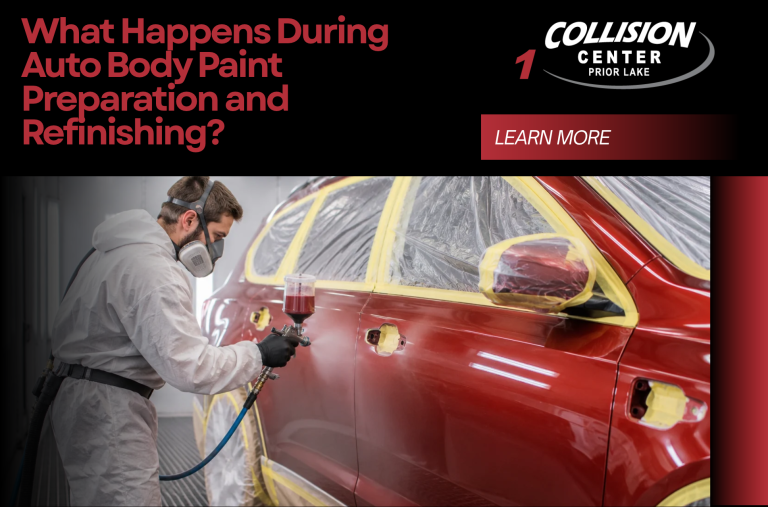
How Is Automotive Paint Applied During Refinishing?
Once preparation, masking, and color matching are complete, the application stage of paint preparation and refinishing begins.
A typical sequence looks like this:
- Technicians inspect the prepared surface one more time.
- They apply any required sealer.
- They spray the basecoat according to product instructions.
- They observe the specified flash time between coats.
- They apply the clearcoat.
- The coating cures using the approved method.
The number of coats depends on the product, the color coverage, and the manufacturer’s instructions.
What Is Flash Time?
Flash time is the waiting period between certain coats.
It allows solvents or other components to evaporate before the next layer goes on. Skipping or shortening flash time can trap solvents and lead to defects, so technicians follow the product’s specifications closely.
Can Poor Application Technique Affect the Finish?
Yes.
Gun distance, spray pattern, overlap, and timing all influence the finish. Problems in any of these areas can cause uneven color, texture differences, runs, or dry spray. Consistent technique is a big part of professional paint preparation and refinishing.
Why Are Paint Booth Conditions Important?
The environment affects both application and curing, so booth conditions matter throughout paint preparation and refinishing.
A properly operated paint booth helps control:
- Dust and airborne particles
- Temperature
- Airflow
- Overspray and vapors
Dust can land in wet paint and leave specks. Meanwhile, temperature and humidity can change how a product flows and cures. Controlled conditions help the coating behave the way its manufacturer intended.
How Long Does Auto Body Paint Take to Dry and Cure?
It depends on the product and the conditions, and curing is often the longest wait in paint preparation and refinishing.
Drying and curing are different stages. A coating can feel dry to the touch well before it reaches its full intended hardness and durability.
- Drying happens as the coating loses enough solvent to become dry to the touch.
- Curing is the process that develops the coating’s full properties.
Some systems allow controlled heat curing according to product instructions. Your repair facility will advise you when the vehicle is ready and whether any care steps apply afterward.
What Happens During the Final Paint Quality Inspection?
Before the vehicle goes home, technicians inspect the refinished area. This last step confirms that paint preparation and refinishing produced the intended result.
The inspection may cover:
- Color consistency with adjacent panels
- Gloss level
- Surface texture
- Complete coverage
- Visible imperfections such as dust or runs
- Clean removal of masking materials
- Proper reinstallation of trim and components
Different lighting can reveal different issues, so technicians often check the finish under more than one light source. Technicians can often correct minor surface imperfections with approved finishing procedures.
Is a Paint Inspection the Same as a Complete Repair Inspection?
No.
The paint inspection focuses on the finish. Depending on the collision, the vehicle may also need structural, mechanical, and electronic checks before the repair is truly complete.
How Does Refinishing Help Protect Against Minnesota Road Salt?
Prior Lake winters bring snow, slush, moisture, and road treatment chemicals.
When a collision damages protective coatings, these conditions can speed up corrosion on exposed metal. Proper paint preparation and refinishing help seal the repaired area again.
Keep in mind that paint and clearcoat are not the only protection. Some repairs also call for:
- Seam sealer
- Cavity wax
- Underbody coatings
- Corrosion-resistant primers
Regular washing during winter can help remove salt buildup. However, washing does not replace a damaged coating, so have exposed metal repaired promptly.
Why Can Paint Repair Costs Vary So Much?
Every repair is different.
Factors that affect the cost of paint preparation and refinishing include:
- Size and depth of the damage
- Panel repair requirements
- Number of panels involved
- Primer and coating materials
- Color complexity, such as tri-coat or pearl finishes
- Blending into adjacent panels
- Disassembly and masking
- Corrosion protection steps
- Final finishing operations
Even a small scratch can require more work than expected if it sits on a body line or reaches bare metal. Estimates can also change once technicians disassemble a panel; our article on why a body repair estimate can change after disassembly explains why.
Does Insurance Cover Paint Refinishing After a Collision?
That depends on your policy and the circumstances of the claim.
Refinishing is usually part of a covered collision repair, but coverage details vary. Collision Center 1 offers insurance claim assistance to help customers understand the process. The Federal Trade Commission’s auto repair basics guide also explains estimates, authorization, and repair records.
How Long Does the Full Refinishing Process Take?
There is no single answer for how long paint preparation and refinishing take.
The timeline depends on the panel repairs, the number of coats, curing requirements, and any other work the vehicle needs. Parts availability and insurance approvals can also affect scheduling. The repair facility can give a better estimate after inspecting the damage.
What Should You Ask Before Authorizing Paint Preparation and Refinishing?
Before you approve the work, consider asking:
- Does the damaged panel need repair or replacement?
- What surface preparation does the shop plan?
- Is any bare metal exposed?
- Which primer and coating system will the shop use?
- How will the shop match the color?
- Will adjacent panels need blending?
- Does the repair include corrosion protection?
- How long will refinishing take?
- What final inspection does the shop perform?
- Are there care instructions after painting?
- What warranty covers the paint work?
You do not need to know every technical detail. Still, clear answers help you understand what you are authorizing and what to expect at pickup.
Why Choose Collision Center 1 Prior Lake for Auto Body Paint Repair?
Quality paint preparation and refinishing depend on preparation, materials, color matching, and inspection working together.
Collision Center 1 has served Minnesota drivers since 1962. Collision Center 1 locations, including Prior Lake, are I-CAR Gold Class certified, and the company holds OEM certifications across a wide range of vehicle brands.
Every repair is backed by a limited lifetime warranty on repair work and paint for as long as you own the vehicle, subject to its terms. Parts are covered according to the applicable manufacturer warranty.
Collision Center 1 Prior Lake also provides collision repair, paintless dent repair, and insurance claim assistance for drivers in Prior Lake, Savage, Shakopee, and the south metro. Drivers can learn more on the Prior Lake location page.
Frequently Asked Questions
What happens during paint preparation and refinishing?
Technicians inspect the damage, clean the surface, complete panel repairs, sand the area, apply the correct primer, and mask surrounding parts. They then match the color, apply basecoat and clearcoat, cure the finish, and inspect the result.
Why is sanding necessary before automotive painting?
Sanding removes damaged coatings, smooths repaired areas, and creates a surface profile the next layer can bond to.
How do auto body shops match the original paint color?
They use the manufacturer’s paint code, formula variants, test panels, and visual comparison to choose and confirm the best match for your vehicle’s current finish.
What is the difference between basecoat and clearcoat?
Basecoat provides the color and effects such as metallic or pearl. Clearcoat adds gloss and helps protect the color layer from the environment.
Why is paint blending sometimes part of paint preparation and refinishing?
Blending creates a gradual transition into an adjacent panel so a slight color difference between new and original paint is less noticeable.
How long does auto body paint refinishing take?
It depends on the repairs, the coating system, curing requirements, and other work on the vehicle. The shop can estimate the timeline after inspecting the damage.
Does refinishing help prevent rust?
A properly applied coating system helps protect repaired surfaces. Some repairs also need seam sealer, cavity wax, or other corrosion protection.
Where can I get professional auto body paint refinishing in Prior Lake?
Prior Lake drivers can visit Collision Center 1 Prior Lake at 16111 Main Ave SE, Prior Lake, MN 55372 to have paint and body damage evaluated and to discuss paint preparation and refinishing options.
Get Professional Auto Body Paint Refinishing in Prior Lake
Paint preparation and refinishing involve much more than applying new color.
The process moves from inspection and surface preparation to primer, color matching, application, curing, and final inspection. Each stage affects how the repair looks and how well it protects the vehicle.
For drivers facing Minnesota winters, restoring damaged coatings also helps guard against moisture and road salt.
Prior Lake drivers can learn more about Collision Center 1’s auto body repair, collision repair, and OEM certifications, or visit the Prior Lake location to have paint damage, scratches, or dents evaluated.
Collision Center 1 – Prior Lake
16111 Main Ave SE Prior Lake, MN 55372
This article is for general educational purposes. Specific repair and refinishing procedures depend on the vehicle, the damage, and the applicable manufacturer and product requirements.