
SUMMARY
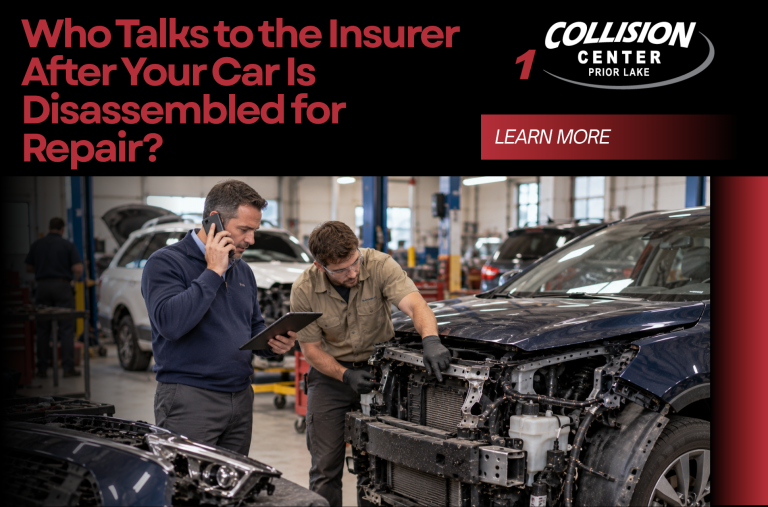
- After a vehicle is disassembled for collision repair, the repair facility typically communicates with the insurance company about newly discovered accident-related damage and changes to the repair plan.
- Disassembly can reveal hidden damage behind bumpers, body panels, lamps, trim, and other components that could not be confirmed during the initial estimate.
- When additional damage is discovered, the shop may prepare a supplemental estimate, commonly called a supplement, and submit supporting documentation to the insurer.
- Supporting information may include photos, measurements, parts information, repair operations, and applicable OEM repair procedures.
- The insurer reviews the supplement according to its claim process. It may request additional documentation or conduct another inspection.
- You are still part of the process. The repair facility handles much of the technical communication, while you should stay informed about major estimate changes, repair decisions, authorization, and the expected completion date.
- An insurer may review what it will pay under the policy, but the repair facility still needs to determine what procedures are appropriate for the actual vehicle and damage.
- Supplements do not automatically mean something went wrong with the original estimate. Some damage cannot be identified until damaged components are removed.
- Insurance communication can affect the repair timeline if additional work requires review before the claim is updated.
- Prior Lake drivers can begin the repair and insurance claim process with Collision Center 1 at 16111 Main Ave SE, Prior Lake, MN 55372.
Your Car Has Been Taken Apart. Who Handles the Insurance Company Now?
You dropped off your vehicle.
The initial estimate was prepared.
The repair process started.
Then the technicians removed the damaged bumper or body panels and discovered more damage underneath.
Now what?
A common question is:
“Do I have to call my insurance company every time the shop finds something new?”
Usually, the repair facility handles much of the technical communication involving changes to the repair plan.
That can include:
- Documenting additional damage
- Updating the estimate
- Taking photographs
- Identifying additional parts
- Researching repair procedures
- Submitting a supplement
Collision Center 1 provides insurance claim assistance to help customers navigate this part of the collision repair process.
You should still remain informed.
But you generally should not have to act as the technical messenger between the collision repair facility and insurance adjuster.
Step 1: The Repair Facility Disassembles the Damaged Area
An initial estimate is commonly prepared while much of the vehicle is still assembled.
The estimator can see damage such as:
- Cracked bumper
- Dented fender
- Broken headlamp
- Scraped door
- Misaligned hood
But some components block the view of what is underneath.
During collision repair, technicians may remove damaged or surrounding components when necessary.
That can expose areas that were not accessible during the original inspection.
Why Does Disassembly Matter to an Insurance Claim?
Because the complete repair scope may become clearer.
For example:
Before disassembly:
- Cracked front bumper
- Damaged grille
After disassembly:
- Broken bumper reinforcement
- Damaged mounting bracket
- Wiring damage
- Damaged sensor mounting point
The additional damage may affect:
- Repair cost
- Parts requirements
- Labor
- Repair procedures
- Completion date
If insurance is involved, those changes may need to be documented and communicated to the insurer.
Step 2: The Shop Documents Newly Discovered Damage
Finding additional damage is only part of the process.
The repair facility also needs to document what was discovered.
Depending on the repair and insurer, documentation can include:
- Photographs
- Updated estimate
- Parts information
- Measurements
- Repair procedures
- Additional labor operations
This gives the insurer information it can use when reviewing the updated claim.
Good documentation also helps you understand why the repair plan changed.
Does Hidden Damage Mean the First Estimate Was Wrong?
Not necessarily.
Some collision damage simply cannot be confirmed while exterior components remain installed.
Consider a rear bumper.
From outside, an estimator might identify:
- Cracked bumper cover
After removal, technicians could discover:
- Damaged reinforcement
- Broken bracket
- Damaged sensor mount
The original estimate may have accurately documented everything visible at the time.
The additional damage became identifiable only after access was available.
Step 3: The Repair Facility Prepares a Supplement
When additional accident-related repairs are identified, the shop may create a:
Supplemental estimate
or simply:
Supplement
A supplement updates the original repair plan.
It may add:
- Parts
- Labor
- Body repair operations
- Refinishing operations
- Diagnostic procedures
- Calibration when required
- Other necessary repair procedures
The updated information can then be provided to the insurance company handling the claim.
Who Actually Sends the Supplement to the Insurance Company?
The collision repair facility commonly handles the submission.
The shop may communicate with:
- Insurance adjuster
- Appraiser
- Claims representative
- Other insurer representative
depending on how the insurance company handles the claim.
This prevents you from having to explain technical collision repair details yourself.
You should still ask the shop to explain major changes to you in plain language.
Step 4: The Insurance Company Reviews the Additional Damage
Once the insurer receives the supplement, it reviews the information according to its claim process.
The insurer may review:
- Photographs
- Estimate changes
- Parts
- Labor operations
- Repair procedures
- Damage documentation
Depending on the claim, the insurer may:
- Review the documentation remotely
- Request more information
- Arrange another inspection
- Discuss individual estimate items with the repair facility
The exact process varies by insurer and claim.
Does the Insurance Adjuster Have to Visit the Shop Again?
Not always.
Some supplemental reviews can be handled using:
- Digital photographs
- Electronic estimates
- Documentation
Other situations may require an additional inspection.
The repair facility and insurer generally coordinate the process based on the insurer’s requirements.
Ask the shop whether the supplement is:
- Submitted
- Under review
- Waiting for additional information
That can help you understand where your repair currently stands.
Step 5: The Shop May Research OEM Repair Procedures
Disassembly does more than expose physical damage.
It can also clarify exactly which components need:
- Repair
- Removal
- Replacement
That information matters because vehicle manufacturers publish procedures for specific repairs.
OEM means:
Original Equipment Manufacturer
Manufacturer information can address:
- Repair versus replacement
- Structural repairs
- Welding
- Joining methods
- Parts
- Corrosion protection
- Scanning
- Calibration
I-CAR provides Repairability Technical Support resources that collision professionals can use to research manufacturer-specific repair information.
Collision Center 1 also maintains multiple OEM certifications across its repair network.
Why Would OEM Procedures Matter to the Insurance Conversation?
Because the repair facility may need to explain why a particular operation is part of the repair plan.
For example, manufacturer information may affect whether a damaged component should be:
- Repaired
- Replaced
or whether another procedure is required after replacement.
The repair facility can provide relevant technical information when discussing the updated estimate with the insurer.
That is another reason the shop is usually better positioned to handle technical repair conversations than the vehicle owner.
Step 6: The Insurer Reviews Coverage and Payment
The repair facility determines what it believes is needed to repair the vehicle appropriately.
The insurance company evaluates the claim according to:
- Policy
- Coverage
- Claim circumstances
- Its estimating and review process
These are related but different responsibilities.
The insurer’s role includes determining what it will pay under the applicable claim.
The repair facility’s role includes developing the repair plan for the damaged vehicle.
Does the Insurance Company Decide How the Vehicle Must Be Repaired?
The insurer can review what it will pay for under the policy and claim.
However, the repair process also needs to consider:
- Actual damage
- Vehicle construction
- OEM repair information
- Appropriate repair procedures
Minnesota consumers also have the right to choose their repair facility.
The Minnesota Department of Commerce provides consumer information about auto insurance claims and repair choices.
You can ask both the insurer and repair facility questions when something is unclear.
Step 7: The Shop and Insurer May Discuss Individual Estimate Items
A supplement is not always approved without additional discussion.
Questions can arise involving:
- Parts
- Labor
- Repair versus replacement
- Refinishing
- Additional procedures
The shop may provide additional documentation explaining why an operation appears on the repair plan.
This communication can happen without you personally participating in every conversation.
But you should be informed if the discussion creates a significant issue affecting:
- Repair plan
- Your financial responsibility
- Completion date
What if the Shop and Insurance Company Do Not Agree?
Ask what the disagreement involves.
Do not assume it automatically means either party is wrong.
The issue could involve:
- Part type
- Labor operation
- Repair method
- Procedure
- Price
- Coverage
Ask the repair facility:
“What repair are you recommending, and why?”
Then ask the insurer:
“What part of that repair are you not including, and why?”
Those questions can help separate the technical repair issue from the insurance coverage issue.
Step 8: You Stay Informed While the Shop Handles Technical Communication
Even when the repair facility communicates directly with the insurer, you are still the vehicle owner.
You should understand major developments.
Ask for updates involving:
- Hidden damage
- Supplements
- Major parts changes
- Repair-versus-replacement decisions
- Delays
- Completion-date changes
You do not need every line of every technical conversation.
But you should know when something materially changes.
How Often Should You Contact the Repair Shop?
You generally do not need to call several times per day.
Ask the shop how it provides repair updates.
Updates may be useful when:
- Disassembly is complete
- Supplement is submitted
- Additional damage is confirmed
- Parts are ordered
- Major delays occur
- Vehicle moves into another repair stage
- Completion date changes
A clear communication process can reduce unnecessary uncertainty.
Step 9: Understand That Supplement Review Can Affect the Timeline
If additional damage requires insurer review, the repair process may be affected while documentation is being handled.
For example:
Day 1:
Vehicle enters repair.
Day 2:
Disassembly reveals hidden damage.
Day 2:
Shop documents damage and prepares supplement.
Next step:
Insurer reviews the updated claim.
The actual timing varies.
Additional repairs may also require:
- New parts
- Additional labor
- OEM procedure research
That means the original completion estimate may change.
Does a Supplement Always Delay the Repair?
Not necessarily.
Some supplements can be processed efficiently.
Others take additional time because:
- More documentation is requested
- Additional inspection is required
- Parts must be ordered
- Repair scope changes substantially
Ask whether the supplement affects the current completion estimate.
That gives you more useful information than simply asking whether the insurer has responded.
Step 10: Ask About Parts Changes
Disassembly may reveal that additional components need replacement.
The supplement could therefore include parts that were not on the original estimate.
Depending on the repair, an estimate might include:
- OEM parts
- Aftermarket parts
- Recycled parts
- Reconditioned or remanufactured components
Parts decisions can depend on:
- Vehicle
- Component
- Condition
- Manufacturer requirements
- Insurance coverage
- Availability
Ask the estimator to explain major parts changes before the repair is completed.
Can Parts Availability Affect the Insurance Process?
It can affect the overall repair.
For example, a part listed on the estimate might be:
- Unavailable
- Backordered
- Superseded by another part
The shop may need to update the repair plan accordingly.
That can affect:
- Estimate
- Parts ordering
- Completion date
Not every repair delay is caused by insurance review.
Sometimes the limiting factor is simply obtaining the correct component.
Step 11: Understand How Scanning Can Affect the Repair Plan
Modern vehicles contain interconnected electronic systems.
Collision damage can potentially affect components associated with:
- Airbags
- Braking
- Lighting
- Cameras
- Radar
- Parking assistance
- Other electronics
Diagnostic scanning can provide information about stored faults.
A diagnostic code does not automatically prove a component needs replacement.
Technicians need to determine:
- What the code represents
- Whether it relates to the collision
- What diagnostic procedure is appropriate
If additional collision-related work is identified, it may become part of the updated repair plan.
Step 12: Understand How ADAS Can Enter the Insurance Discussion
Advanced Driver Assistance Systems, or ADAS, can include:
- Cameras
- Radar
- Ultrasonic sensors
These systems may support functions such as:
- Automatic emergency braking
- Forward collision warning
- Blind-spot warning
- Lane assistance
- Adaptive cruise control
The National Highway Traffic Safety Administration provides information about common driver-assistance technologies.
If disassembly reveals damage involving a sensor or mounting location, the shop may need to update the repair plan.
Does Every Supplement Include ADAS Calibration?
No.
Calibration depends on:
- Vehicle
- Installed systems
- Damage
- Parts removed
- Parts replaced
- Manufacturer procedures
A supplement should not automatically include calibration simply because a vehicle has ADAS.
Likewise, required calibration should not be skipped when the applicable procedure calls for it.
Step 13: Ask Who Authorizes Additional Repair Work
Insurance approval and customer authorization are related but not identical.
The insurer determines what it will pay according to the policy and claim.
You remain the vehicle owner.
Ask the repair facility how it handles authorization when:
- Repair cost changes
- Additional damage is found
- Major parts are added
- Repair method changes
The exact process can depend on:
- Shop procedures
- Insurance claim
- Repair authorization you signed
Understanding this before major changes occur can prevent confusion later.
What if You Are Paying for the Repair Yourself?
Then there may be no insurer involved.
The shop should communicate additional findings directly to you.
If disassembly reveals more damage, ask for an updated estimate before authorizing significant additional work.
The same basic questions still apply:
- What did you find?
- Why does it need repair?
- What changed?
- How much will it add?
- Will it change the completion date?
Insurance involvement changes who else participates in the process, but it does not change the importance of clear repair communication.
Step 14: Ask Whether Your Rental Car Authorization Needs Updating
If you are using a rental vehicle, a repair delay can affect transportation arrangements.
When the repair timeline changes, ask:
- Has the expected completion date changed?
- Has the insurer been informed?
- Do I need to contact the rental company?
- Does my policy have a rental limit?
The repair facility can explain the updated repair timeline.
The insurer determines rental coverage under the applicable policy or claim.
Do not assume that additional rental days are automatically approved simply because the repair requires more time.
Step 15: Review the Supplement Before the Repair Is Finished
You do not necessarily need to analyze every estimating line.
But understand the major changes.
Compare the original estimate with the supplement.
Look for additions involving:
- Parts
- Body labor
- Structural repair
- Refinishing
- Scanning
- Calibration
- Other procedures
Ask about anything significant that you do not understand.
A good repair explanation should make sense even if you are not a collision repair professional.
What Should You Ask When a Supplement Is Submitted?
Useful questions include:
- What additional damage did you find?
- Where was it located?
- Why wasn’t it visible before disassembly?
- Has the insurer received the supplement?
- Is anything still under review?
- Are additional parts required?
- Does this change the repair method?
- Does this change the completion date?
- Is there anything I need to authorize?
- Is there anything I need to discuss directly with my insurer?
These questions keep you informed without requiring you to manage the technical claim process yourself.
Step 16: Keep Your Repair and Insurance Documentation
Save:
- Initial estimate
- Supplements
- Insurance correspondence
- Final invoice
- Parts information
- Warranty documentation
When applicable, also keep:
- Alignment documentation
- Scan documentation
- Calibration documentation
These records create a history of:
- What was originally identified
- What was discovered later
- What was repaired
- What was replaced
That information can be useful if a concern arises later.
When Should You Personally Contact the Insurance Company?
Even when the repair facility is communicating with the insurer, there are situations where you should speak directly with your insurance company.
Examples include questions about:
- Deductible
- Rental coverage
- Policy limits
- Coverage decisions
- Payment
- Claim status
- Your financial responsibility
The repair shop can explain the repair.
The insurer can explain the insurance policy and claim decision.
Keeping those roles separate can make complicated conversations easier to understand.
Frequently Asked Questions
Who contacts insurance when hidden damage is found after disassembly?
The collision repair facility commonly documents the newly discovered damage and communicates the updated repair information to the insurance company through a supplemental estimate.
Do I have to call my insurance company every time the body shop finds more damage?
Usually not for every technical repair update. The repair facility commonly handles supplement documentation and technical communication, while you should remain informed about significant changes and contact your insurer about coverage questions when needed.
What does the body shop send to the insurer after finding hidden damage?
Depending on the claim, the shop may provide an updated estimate, photographs, parts information, repair operations, measurements, or applicable repair-procedure documentation.
Does the insurance adjuster need to inspect my vehicle again?
Not always. Some supplements can be reviewed electronically, while other claims may require additional information or another inspection. The process varies by insurer and claim.
Can the repair shop continue working while a supplement is being reviewed?
It depends on the repair, authorization, insurer process, and work involved. Ask the repair facility whether anything is currently waiting on review and whether it affects the repair timeline.
Who decides whether a damaged part should be repaired or replaced?
The repair plan should consider the actual damage, vehicle construction, and applicable OEM repair procedures. The insurer separately reviews what it will pay under the policy and claim.
Should I receive a copy of the supplemental estimate?
Ask the repair facility for copies of important repair documents and keep the original estimate, supplements, and final invoice together for your records.
Where can Prior Lake drivers get help with collision repair and insurance communication?
Prior Lake drivers can visit Collision Center 1 at 16111 Main Ave SE, Prior Lake, MN 55372 for collision repair and assistance navigating communication during the repair process.
Stay Informed Without Becoming the Middleman in Your Insurance Claim
Once your vehicle is disassembled, the collision repair process can become more technical.
Technicians may discover damage involving:
- Reinforcement
- Brackets
- Wiring
- Sensors
- Structural components
- Other previously hidden parts
You should not have to translate all of those findings between the technician and insurance adjuster yourself.
The repair facility can handle much of the technical communication by:
- Documenting additional damage
- Preparing supplements
- Providing supporting information
- Discussing repair operations with the insurer
Your role is to remain informed and ask questions when something significant changes.
Contact the repair facility for questions about what the vehicle needs and why.
Contact the insurer for questions about coverage, deductibles, rental benefits, and claim payment.
That division of responsibilities can make a complicated collision repair easier to follow.
Prior Lake drivers can learn more about Collision Center 1’s collision repair, insurance claim assistance, or visit the Prior Lake location to begin the repair process.
Collision Center 1 – Prior Lake
16111 Main Ave SE Prior Lake, MN 55372