
SUMMARY
- Structural measuring may be necessary after a collision when an impact could have changed the position or dimensions of a vehicle’s frame, unibody structure, or important mounting points.
- Structural damage is not always visible, so a vehicle can look straight while underlying components have shifted.
- Front-end, rear-end, and side-impact collisions can all affect structural alignment, depending on the direction and severity of the impact.
- Uneven panel gaps, steering changes, and wheel alignment concerns may point to structural damage, although these symptoms can also have other causes.
- Technicians compare designated reference points on the vehicle with manufacturer specifications to identify possible displacement.
- Not every collision requires structural measuring; the decision depends on the damage, the vehicle’s design, and the manufacturer’s repair procedures.
- Accurate measurements help guide repair decisions, including whether a structural component can be repaired or must be replaced.
- Post-repair measurements may be needed to confirm that repaired structures meet the applicable specifications.
- Structural repairs can also affect wheel alignment, diagnostic scanning, and ADAS calibration requirements.
- Golden Valley drivers can have possible structural damage evaluated at Collision Center 1 Golden Valley, 900 Florida Ave S, Golden Valley, MN 55426.
Introduction
Structural measuring is one of the most important steps in a collision repair, yet many drivers never hear about it until it appears on an estimate.
After an accident, most people look at the visible damage first:
- A bent fender
- A cracked bumper cover
- A door that sticks
- A hood that no longer lines up
Those problems make the need for repair obvious. However, the force of an impact can also travel into parts of the vehicle you cannot see from the outside.
So how do technicians know whether the frame or unibody moved?
They measure it.
Structural measuring compares specific reference points on the vehicle with the dimensions published by the manufacturer. As a result, technicians can tell whether the structure is still where it belongs or whether it shifted during the collision.
For drivers in Golden Valley, MN, understanding this process helps explain why a repair estimate may include structural inspections even when the exterior damage looks fairly minor.
Collision Center 1 Golden Valley provides collision repair for drivers in Golden Valley and nearby Twin Cities communities, and the team can explain which inspections a specific vehicle needs.
This guide covers when structural measuring is needed, how it works, and what to ask before repairs begin.
What Is Structural Measuring in Collision Repair?
Structural measuring is a process technicians use to check the dimensions and alignment of a vehicle’s frame or unibody structure.
Every vehicle has designated reference points, such as holes, bolts, or mounting locations, at precise positions. Manufacturers publish the correct dimensions between these points.
During measuring, technicians compare the vehicle’s actual dimensions with those specifications. If the numbers do not match within the allowed tolerances, part of the structure has likely moved.
In short, structural measuring answers a simple question: is the vehicle’s structure where the manufacturer designed it to be?
Why Does Structural Measuring Matter?
Because the structure supports almost everything else on the vehicle.
The frame or unibody holds:
- Suspension and steering mounting points
- Door, hood, and trunk openings
- Crash energy management components
- Bumper reinforcements
- Mounting locations for some cameras and radar sensors
If the structure shifts, those systems may no longer sit in their intended positions. For example, a displaced suspension mount can affect wheel alignment, while a distorted door opening can cause gaps, wind noise, or water leaks.
A structural check gives technicians objective data instead of guesses, so they can plan repairs based on what actually changed.
When Is Structural Measuring Needed After a Collision?
Structural measuring is not automatically required after every accident.
Instead, technicians decide based on:
- The vehicle’s construction
- The location and direction of the impact
- Visible and suspected hidden damage
- The applicable manufacturer repair procedures
Situations that commonly call for structural evaluation include:
- Significant front-end or rear-end impacts
- Side collisions that reach pillars, rocker panels, or floor areas
- Damage near suspension mounting points
- Uneven door, hood, or trunk gaps after the accident
- Visible frame or unibody deformation
- Damage that extends beyond the outer body panels
- Repairs that involve replacing structural components
- Manufacturer procedures that call for structural inspection
In every case, the vehicle’s appearance alone cannot confirm that its structural dimensions are correct.
Can a Minor Collision Require Structural Measuring?
Sometimes.
A relatively low-speed impact can still push force into a bumper reinforcement, a mounting bracket, or the end of a structural rail. Modern vehicles are designed to absorb crash energy, and some of that absorption happens in parts hidden behind trim and bumper covers.
That said, many minor accidents do not cause structural damage. The only reliable way to know is a proper inspection, followed by measurements when the findings point that way.
If you want to learn more about how small impacts can hide bigger problems, see this guide on what uneven panel gaps mean after an accident.
Does a Damaged Bumper Mean the Frame Is Bent?
No.
Bumper damage does not automatically mean the frame or unibody moved. In many cases, the bumper cover and its absorber take the impact, and the structure behind them stays within specification.
However, technicians often need to remove the bumper cover to inspect the reinforcement, brackets, and rail ends. If those areas show damage, structural measuring helps confirm whether anything shifted.
Why Is Structural Measuring Important After a Front-End Collision?
Front-end impacts can send force through the bumper system and into the components behind it.
Depending on the vehicle, the affected areas may include:
- Front structural rails
- Bumper reinforcements and crush zones
- Radiator supports
- Apron and inner fender structures
- Front suspension mounting locations
Because these parts sit behind the bumper and hood, the exterior may not reveal how far the damage reached. Dimensional measuring helps technicians find displacement that a visual check might miss.
Can a Vehicle Have Front Structural Damage Without Major Hood Damage?
Yes.
Exterior damage does not always reflect the full extent of an impact. For instance, a hood may close normally while a front rail or radiator support has shifted slightly.
Signs that could point to hidden front-end displacement include:
- Uneven gaps between the hood and fenders
- Headlights that no longer line up evenly
- A steering wheel that sits off-center
- A vehicle that pulls to one side
These clues do not confirm structural damage on their own. Still, they are good reasons to ask whether structural measuring is part of the repair plan. For related concerns, see how a front-corner collision can affect headlights and their mounts.
Why Do Suspension Mounting Points Matter?
Suspension mounting points hold the suspension components in their intended positions.
If a collision moves one of these points, the wheels may no longer sit at the correct angles. As a result, drivers may notice pulling, uneven tire wear, or a steering wheel that is no longer centered.
Measuring can show whether a mounting point moved. That information matters because adjusting the alignment alone cannot correct a displaced mount.
When Is Structural Measuring Needed After a Rear-End Collision?
Rear-end collisions can affect much more than the bumper cover or trunk lid.
Depending on the force of the impact, damage may involve:
- Rear structural rails
- The rear body panel
- Trunk floor or cargo floor sections
- Rear suspension mounting points
- Quarter panel inner structures
Structural measuring is often needed when the rear of the vehicle shows signs that its shape changed. For example, technicians may measure the rear structure when the trunk no longer lines up or the floor shows buckling.
What Signs May Point to Rear Structural Damage?
Possible warning signs include:
- A trunk or liftgate that no longer lines up
- Uneven gaps around the rear body panels
- Damaged rear bumper mounting points
- A distorted or wrinkled cargo floor
- New water leaks into the trunk area
- Rear quarter panels that sit out of position
These symptoms suggest that damage may extend beyond the outer panels. A careful inspection, along with measuring when appropriate, helps confirm the cause. For more on rear body repairs, see when a rear quarter panel is repaired instead of replaced.
Can a Trunk That Will Not Close Point to Structural Damage?
Yes, it can.
A trunk lid or liftgate seals against a body opening. If the collision distorted that opening, the lid may not line up, latch, or seal correctly, even after a new lid is installed.
In that situation, structural measuring helps technicians decide whether the opening itself moved. Replacing the lid without correcting the opening may leave the problem unresolved.
Does Every Rear-End Accident Require Structural Measuring?
No.
A light bump may only damage the bumper cover and absorber. In contrast, a harder impact that reaches the rear body panel or floor is more likely to call for a structural check.
Technicians base the decision on the inspection findings and the manufacturer’s repair requirements.
How Can a Side-Impact Collision Affect Structural Alignment?
Side impacts can involve some of the most important parts of a vehicle’s structure.
The affected areas may include:
- Doors and door openings
- Hinge and lock pillars
- Rocker panels
- Floor structures
- Roof rail areas
- Suspension mounting points near the wheels
Several of these components help protect occupants. Because of that, technicians take side-impact damage seriously and often use structural measuring to check the surrounding body dimensions.
Can Uneven Door Gaps Point to Structural Movement?
Yes.
When a door opening changes shape, the door may sit unevenly, rub, or fail to seal. Gaps that look wider at the top than the bottom, or a door that suddenly needs extra force to close, are common clues.
Measurements help confirm whether the opening moved or whether the door itself is the only damaged part.
Can a Door Be Replaced Without Addressing Structural Damage?
Replacing a door alone may not fix the problem.
If the pillar or opening shifted, a new door can still sit out of position. In addition, a distorted opening can affect weatherstripping, latches, and side airbag sensors in some vehicles.
That is why technicians look at the surrounding structure before deciding on the repair. For a deeper look at side damage, see whether a sideswipe can damage more than your car’s doors.
What Are the Signs That a Vehicle May Need Structural Measuring?
Some symptoms suggest that collision damage reaches beyond the exterior panels.
| Warning sign | Possible concern |
|---|---|
| Uneven door gaps | Distorted door opening or body alignment |
| Hood does not close evenly | Front structural or mounting damage |
| Trunk or liftgate misalignment | Rear body or mounting point damage |
| Vehicle pulls to one side | Suspension, steering, tire, or structural concern |
| Unusual tire wear after a collision | Wheel alignment or related damage |
| Visible frame deformation | Possible structural displacement |
| New water leaks | Damaged seals, seams, or body openings |
| Misaligned bumper or panels | Damaged brackets, panels, or underlying structure |
None of these symptoms confirms structural damage by itself. Instead, each one is a reason to have a professional inspection, which may include structural measuring.
How Does Structural Measuring Work?
Technicians check designated points on the vehicle against the manufacturer’s published dimensions.
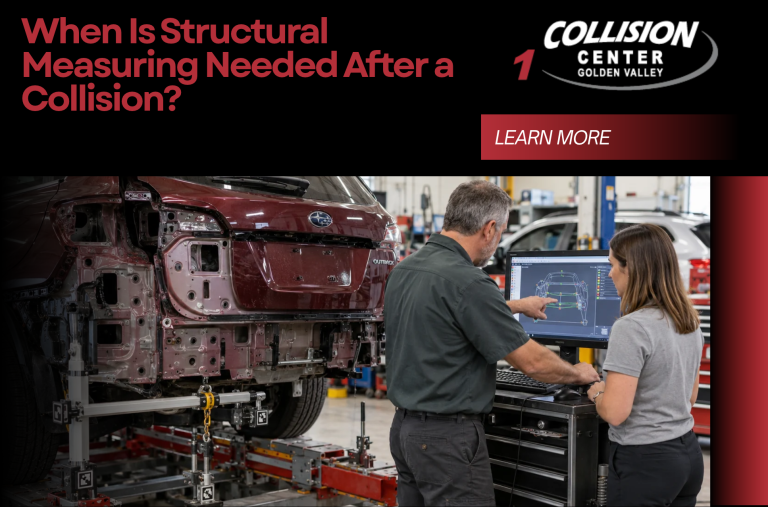
Depending on the vehicle and the shop’s equipment, they may use electronic measuring systems or other approved methods. Many modern systems measure reference points in three dimensions and display the results on a computer.
The goal is the same either way: compare the vehicle’s real dimensions with the dimensions it should have.
What Happens During the Structural Measuring Process?
A typical process follows these steps:
- Vehicle identification: Technicians confirm the make, model, model year, and correct specifications.
- Damage inspection: They evaluate visible damage and areas where hidden damage may exist.
- Repair information review: They look up the manufacturer’s measuring and repair procedures.
- Vehicle setup: They position and secure the vehicle as the measuring system requires.
- Reference point measurements: They measure designated structural locations.
- Specification comparison: They compare actual dimensions with manufacturer data.
- Repair planning: They use the findings to choose the right structural repair operations.
- Verification: When required, they measure again after the repairs.
Each step builds on the last, so accurate results depend on using the correct vehicle data from the start.
What Is Three-Dimensional Structural Measuring?
Three-dimensional measuring checks the position of reference points in length, width, and height.
This matters because a collision can move a structure in more than one direction at once. For example, a front rail might shift sideways and downward at the same time. A three-dimensional reading helps technicians see the full picture.
Does Structural Measuring Always Mean the Frame Needs Straightening?
No.
Dimensional measuring is an assessment, not a repair. In many cases, the measurements confirm that the checked dimensions are within specification.
When the readings do show displacement, the next step depends on the component, its material, and the manufacturer’s instructions.
What Is the Difference Between Structural Measuring and Wheel Alignment?
Both involve vehicle geometry, but they check different things.
- Structural measuring compares frame or body reference points with manufacturer dimensions.
- Wheel alignment checks wheel angles, such as camber, caster, and toe.
A vehicle can have an alignment problem without structural damage. On the other hand, structural damage can exist even when the vehicle drives without obvious symptoms.
Can a Wheel Alignment Fix a Bent Frame?
No.
An alignment adjusts the wheels within the range the suspension allows. It cannot move a structural rail or a displaced mounting point back into place.
For that reason, technicians usually complete the necessary structural and mechanical repairs before the final alignment when the damage affects suspension geometry.
Does Every Vehicle Need Both Structural Measuring and an Alignment?
Not always.
Some repairs only need an alignment check, while others need measuring and no alignment. Many significant collisions require both. The specific damage and the manufacturer’s requirements decide which procedures apply.
How Do Unibody and Body-on-Frame Vehicles Differ During Structural Measuring?
Most modern cars and many SUVs use unibody construction, while many full-size pickups use body-on-frame construction.
- Unibody construction combines the body and structural framework into one load-bearing assembly.
- Body-on-frame construction uses a separate frame that supports the body and major mechanical parts.
Both designs may need structural measuring after a collision. However, the reference points, specifications, and setup differ by vehicle, so technicians must use the correct manufacturer data for the exact model.
Why Does the Manufacturer’s Repair Procedure Matter?
Vehicles use different steels, aluminum alloys, and joining methods. Consequently, the approved way to measure and repair one model may not apply to another.
Manufacturer procedures can specify:
- Which reference points to measure
- Allowed tolerances
- Whether a part may be straightened or must be replaced
- Sectioning locations and restrictions
- Welding, riveting, or bonding requirements
- Corrosion protection steps after the repair
The I-CAR Repairability Technical Support portal gives repair professionals access to manufacturer-specific repair information. Collision Center 1 also holds OEM certifications across a wide range of brands.
Can Structural Damage Be Repaired, or Does It Require Replacement?
It depends on the part, its material, the amount of deformation, and the manufacturer’s limits.
Some structural components can be repaired with approved methods. Others must be replaced once the damage passes a certain point.
Factors that shape the decision include:
- Structural material
- Location of the component
- Severity of the damage
- Permitted straightening methods
- Sectioning restrictions
- Joining requirements
Measuring supports this decision by showing how far and in which direction the structure moved.
Can Every Bent Structural Rail Be Straightened?
No.
Some rails and reinforcements have strict repair limits. Certain high-strength steels, for example, can lose strength if technicians bend them back or apply heat outside the manufacturer’s guidelines. In those cases, the procedure calls for replacement instead.
Can Heat Be Used to Straighten Structural Damage?
Only when the manufacturer’s procedure allows it.
Many modern structural materials have tight heat restrictions. Technicians follow the published instructions rather than relying on older shop habits, because the wrong technique can weaken the part.
Why Should Technicians Measure Before Repairs Begin?
Measuring first tells technicians where the structure moved and by how much.
With that information, they can:
- Choose the right repair method
- Decide whether parts need replacement
- Plan the order of repair operations
- Avoid overcorrecting one area while another stays out of position
Without measurements, technicians would have to rely on appearance alone, which often misses small but important changes.
Why Are Post-Repair Structural Measurements Important?
After structural repairs, final measurements help confirm the results.
They can verify:
- Reference point positions
- Repaired frame or body dimensions
- Mounting point locations
- Completion of the needed corrections
A vehicle that looks straight is not necessarily within specification. Post-repair structural measuring gives technicians and owners documented confirmation instead of a visual guess.
Does Structural Measuring Replace Other Final Inspections?
No.
Depending on the repair, the vehicle may also need:
- Mechanical inspections
- Wheel alignment
- Diagnostic scanning
- ADAS calibration
- Road testing
A structural check is one piece of a complete verification process, not the whole process.
Can Structural Damage Affect ADAS and Other Safety Systems?
Yes, in some cases.
Many vehicles use cameras and radar sensors mounted to bumpers, grilles, windshields, or nearby structures. If a collision moves those mounting areas, the sensors may not point exactly where the system expects.
Manufacturer procedures may therefore require calibration after certain structural or mechanical repairs. Requirements vary by vehicle, and a diagnostic scan does not replace a required calibration.
The Insurance Institute for Highway Safety explains how these driver-assistance technologies work and where their limits are.
Why Can Structural Measuring Change a Collision Repair Estimate?
An initial estimate is based on what technicians can see before disassembly.
Once they remove parts and measure the structure, they may find additional damage. As a result, the repair plan can change to include:
- Structural component repair or replacement
- More disassembly
- Suspension inspection
- Wheel alignment
- Manufacturer-required joining procedures
- Corrosion protection
- Diagnostic scanning or calibration
This is a normal part of thorough collision repair. For more detail, see why a body repair estimate can change after disassembly.
What Is a Collision Repair Supplement?
A supplement documents damage or repair operations found after the original estimate.
A supplement does not necessarily mean the first estimate was wrong. Some damage only becomes clear after technicians remove parts or complete structural measuring.
Will Insurance Cover Structural Measuring?
Coverage depends on your policy, the claim circumstances, and the insurer’s review.
Collision Center 1 offers insurance claim assistance to help drivers understand the repair claim process. In addition, the Federal Trade Commission’s auto repair basics guide explains estimates, authorization, and repair records.
What Records Should You Keep After Structural Repairs?
Ask for documentation of the work that applies to your vehicle, such as:
- Pre-repair structural measurements
- Post-repair structural measurements
- The final repair invoice
- Any supplements
- Alignment printouts
- Scan or calibration reports
These records can help with future service, insurance questions, or resale.
What Questions Should You Ask About Structural Measuring After an Accident?
You do not need to understand every measurement. Still, it helps to ask:
- Does the damage suggest structural displacement?
- Do manufacturer procedures call for measurements on this vehicle?
- Which structural areas will you inspect?
- Do you suspect hidden damage?
- Will you measure before repairs begin?
- Are any components damaged beyond their repair limits?
- Will you measure again after the repairs?
- Could the damage affect suspension or wheel alignment?
- Will the vehicle need diagnostic scanning or ADAS calibration?
- Will I receive copies of the measurement results?
Clear answers help you understand how the shop plans to restore your vehicle.
Why Choose Collision Center 1 Golden Valley for Structural Measuring and Collision Repair?
When collision damage reaches structural areas, the repair process needs careful inspection, accurate measurements, and manufacturer-specific procedures.
Collision Center 1 has served Minnesota drivers since 1962. At the Golden Valley location:
- The shop holds I-CAR Gold shop certification.
- Technicians carry I-CAR Platinum certifications.
- Collision Center 1 holds OEM certifications across a wide range of vehicle brands.
- Repairs are backed by a limited lifetime warranty on repair work and paint for as long as you own the vehicle, with parts covered by the applicable manufacturer warranty.
The team provides collision repair, auto body repair, and insurance claim assistance for drivers in Golden Valley, Minneapolis, Robbinsdale, New Hope, St. Louis Park, and nearby communities.
Learn more on the Golden Valley location page.
Frequently Asked Questions
When is structural measuring necessary after a car accident?
Structural measuring may be necessary when collision damage affects, or may have moved, structural components, mounting points, or body openings. Manufacturer procedures may also require specific measurements.
Can a minor accident require structural measuring?
Sometimes. A low-speed impact can affect reinforcements or mounting points, but many minor accidents do not cause structural damage. An inspection determines whether measuring is needed.
How can I tell if my car’s frame is bent?
Uneven panel gaps, steering changes, unusual tire wear, or visible deformation can be signs. However, these symptoms have other possible causes, so a professional inspection and measurement may be needed.
Is structural measuring the same as a wheel alignment?
No. Dimensional measuring checks frame or body dimensions, while a wheel alignment checks wheel angles and related suspension geometry.
Does every collision repair require structural measuring?
No. The need depends on the damage, the vehicle’s construction, the inspection findings, and the manufacturer’s repair requirements.
Why do technicians measure again after structural repairs?
Post-repair measurements confirm that the designated structural reference points meet the manufacturer’s specifications after the repair.
Can structural measuring affect my repair estimate?
Yes. If measurements reveal additional damage, the repair plan may change, and the shop may submit a supplement to the insurer.
Where can I get structural damage evaluated in Golden Valley, MN?
Golden Valley drivers can have possible structural damage evaluated at Collision Center 1 Golden Valley, 900 Florida Ave S, Golden Valley, MN 55426.
Get Structural Damage Evaluated in Golden Valley
Structural measuring plays a key role when an accident may have affected a vehicle’s frame, unibody, or mounting points.
Front-end, rear-end, and side impacts can all create hidden damage. Meanwhile, symptoms like uneven gaps or steering changes may hint at problems below the surface.
Not every collision needs measuring. Even so, when the damage or the manufacturer’s procedures call for it, accurate measurements help technicians:
- Find hidden displacement
- Choose the right repair method
- Verify the structure after repairs
If your vehicle was in an accident and you are concerned about hidden structural damage, a professional assessment is the best place to start.
Golden Valley drivers can learn more about Collision Center 1’s auto body repair, collision repair, and OEM certifications, or visit the Golden Valley location to have collision damage evaluated.
Collision Center 1 – Golden Valley
900 Florida Ave S Golden Valley, MN 55426
This article is for general educational purposes. Repair requirements vary by vehicle, damage, and manufacturer procedures.